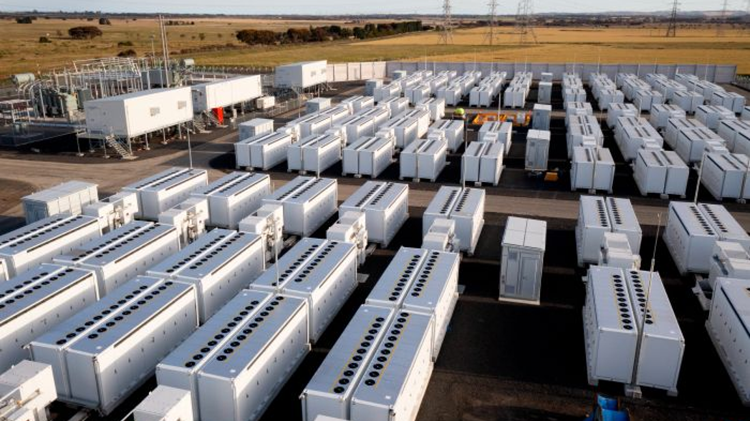












Barbados has taken a major step in its energy transition with the launch of a tender to award 60 MW of capacity and 240 MWh of storage through battery energy storage systems (BESS). The process has received backing from multilateral institutions and generated strong interest from the private sector.
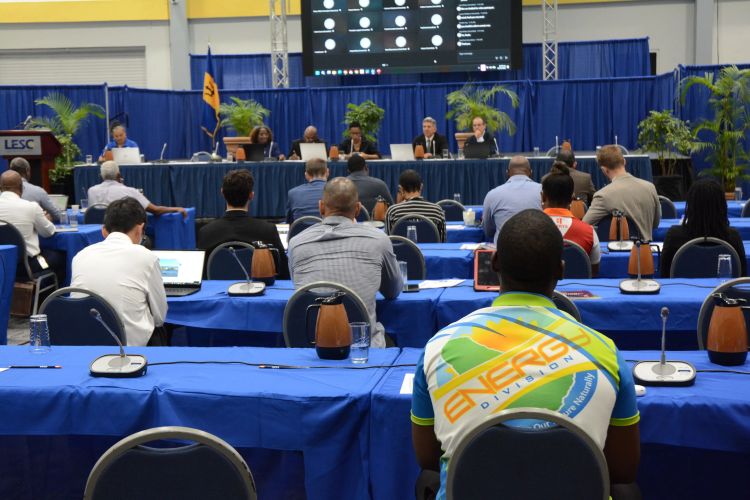
More than 200 participants representing over 40 companies took part in the Pre-Bid Conference held on 23 January, organised by the Government of Barbados through the Ministry of Energy and Business. The event was also supported by the Fair Trading Commission, the utility Barbados Light & Power, the Inter-American Development Bank, the Global Energy Alliance for People and Planet, and the Central Bank of Barbados, which is providing a Liquidity Support Guarantee also designed by RELP.
Until now, the country had operated under a feed-in tariff scheme, with no precedent for price-based competition. This tender marks a structural shift: for the first time, competitive allocation mechanisms will be used in the island’s electricity sector. To enable this change, Parliament approved a new Electricity Act and introduced specific regulations allowing this type of procurement.
The technical design of the process was led by RELP, a non-profit organisation founded in 2020 and funded through philanthropic contributions. RELP previously designed Argentina’s RenovAr renewable energy programme and recently supported a solar auction in Jamaica, which achieved average prices of USD 60/MWh. The second competitive phase in Jamaica will be launched on 19 March through an Expression of Interest (EOI) as the first step of the process.
In Barbados, RELP prepared the technical documentation, coordinated grid studies, defined the contractual framework and supported the country’s regulatory adaptation. The experience accumulated across the region is now enabling RELP—together with Organisation of Caribbean Utility Regulators, Caribbean Centre for Renewable Energy and Energy Efficiency and other relevant regional stakeholders—to explore the development of a joint tender involving multiple Caribbean countries.
The contractual structure of the Barbados BESS tender includes a Storage Licence, a Storage Agreement with Barbados Light & Power, an Interconnection Agreement, and a Liquidity Support Guarantee provided by the Central Bank. This guarantee covers up to three months of payments in the event of default.
Auctions, storage and technical frameworks: the energy agendas of Panama, Costa Rica and the Dominican Republic
Bids must be submitted by 6 March via the government’s electronic procurement platform. According to the authorities, this deadline could be extended due to the electoral calendar.
Projects must use lithium iron phosphate (LiFePO₄) batteries, with a minimum efficiency of 85%, availability of 95%, and the ability to operate in island mode. Strict response times to grid events are also required.
Each bid must be linked to a specific site, with projects of up to 20 MW depending on the capacity limits of each published interconnection point, and a maximum of 30 MW awarded per bidder. Contracts will have a duration of 16 years, with an option to extend for an additional five years.
In addition, bidders are required to submit a Decommissioning Plan within the first 12 months, along with an associated fund within 18 months of licence issuance. As a result, developers must demonstrate experience in the construction and operation of similar projects.
The tender not only introduces utility-scale energy storage to the island, but also establishes a new regulatory and financial benchmark for the region. With bankable instruments, strong institutional backing and growing market participation, Barbados is positioning itself as a reference for other Caribbean countries seeking to advance their energy transition.
Since 2023, RELP has been working across the Caribbean, replicating competitive procurement schemes for clean energy and battery storage in small-scale markets. “We are doing the same as we did in Argentina, but free of charge for the countries,” representatives of the organisation explained.
Building on this regional experience, RELP—together with its partners—is now moving towards a coordinated approach. “Instead of each country individually implementing the same processes, we have launched a joint procurement initiative, in parallel, for Caribbean countries interested in participating, known as the Caribbean Aggregation Procurement Programme,” said Ramiro Gómez Barinaga, Global Director of Country Delivery at RELP.