










Petróleos Mexicanos (Pemex) has officially launched its renewable energy roadmap to 2026, outlining concrete projects in offshore wind power, high-enthalpy geothermal energy and green hydrogen production. The plan represents a strategic pivot for the company as it seeks to reposition itself within Mexico’s evolving energy landscape.
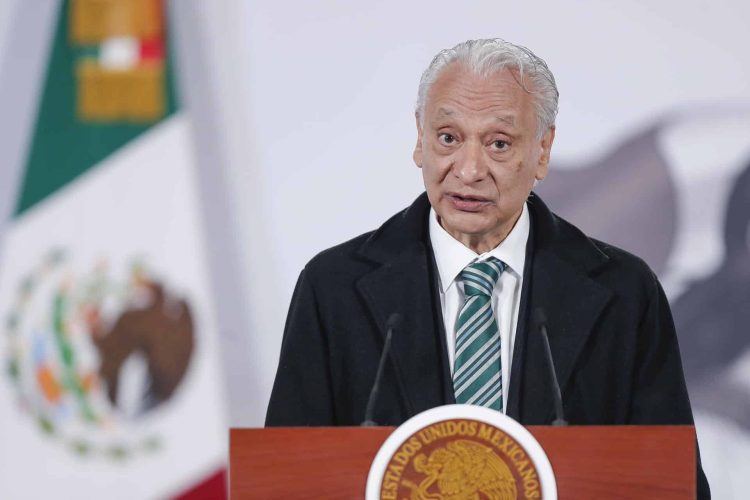
Speaking at an official government event, Pemex CEO Víctor Rodríguez Padilla described the initiative as “a comprehensive vision that strengthens energy sovereignty, improves efficiency and leverages existing assets, while contributing to sustainability through a gradual reduction of the carbon footprint”.
One of the most significant announcements involves the use of decommissioned oil and gas platforms in the Gulf of Mexico to deploy offshore wind generation. According to Rodríguez Padilla, the Campeche Sound alone has a technical potential exceeding 2,500 million GWh per year, with pre-feasibility studies already completed.
Pemex’s entry into offshore wind is particularly relevant given Mexico’s strong offshore resource potential. The country has more than 11,000 kilometres of coastline across the Pacific Ocean and the Gulf of Mexico, with average wind speeds above 7 m/s in shallow waters, according to the Global Wind Energy Council (2024) and the Ministry of Energy (2023). Recent studies suggest Mexico could surpass 15 GW of installed offshore wind capacity, with the Isthmus of Tehuantepec identified as one of the most promising regions.
In parallel, Pemex plans to develop green hydrogen projects powered by solar energy, alongside a biofuels programme that includes the production of bioethanol for blending with petrol. The company will also expand its geothermal portfolio, using residual heat from high-temperature wells to generate dispatchable, low-carbon electricity.
“These are not conceptual projects,” Rodríguez Padilla stressed. “They are concrete initiatives already under development, aligned with a pragmatic and sovereign energy transition.”
The roadmap is being implemented in coordination with Mexico’s Ministry of Energy (Secretaría de Energía), the Mexican Petroleum Institute, the National Autonomous University of Mexico (UNAM), the National Institute of Electricity and Clean Energies (INEEL) and LitioMX. Together, they form part of what the federal government describes as an “orderly, sovereign and socially just energy transition”.
In the case of green hydrogen, Pemex is working jointly with the Federal Electricity Commission (Comisión Federal de Electricidad) to implement hydrogen blending schemes in combined-cycle gas turbines. This approach aims to reduce power generation emissions without the need for full infrastructure replacement.
The announcement comes at a critical moment for Mexico’s energy sector, as market players await concrete progress on the National Renewable Hydrogen Strategy promised by the government. This framework is expected to define the technical, regulatory and fiscal foundations for a market that could exceed USD 4 billion in value over the next decade.
The broader context is also dynamic. Mexico has recently awarded 3.3 GW of renewable generation capacity and 1.2 GW of energy storage in its first major tender. However, the second round—initially scheduled for January—has yet to be launched, creating uncertainty and anticipation among private investors.
At the same time, CFE has announced a MXN 29 billion investment plan to add more than 1.5 GW of new capacity across renewables and energy storage, reinforcing its role as a central operator in the country’s transition under binding planning guidelines.
Against this backdrop, Pemex’s move sends a clear signal to the market: energy transformation in Mexico is no longer solely a regulatory or environmental issue, but a structural variable of the national energy system—where the real deployment of projects will determine whether the country emerges as a regional leader or falls behind.