










The government of the Dominican Republic has formalised the transformation of the Empresa de Transmisión Eléctrica Dominicana (ETED) into a state-owned corporation through Decree 55-26. The move goes beyond a corporate reorganisation: it redefines ETED’s role within the National Interconnected Electricity System (SENI) by granting it operational autonomy, contracting capacity and an expanded corporate purpose that includes the provision of ancillary services.
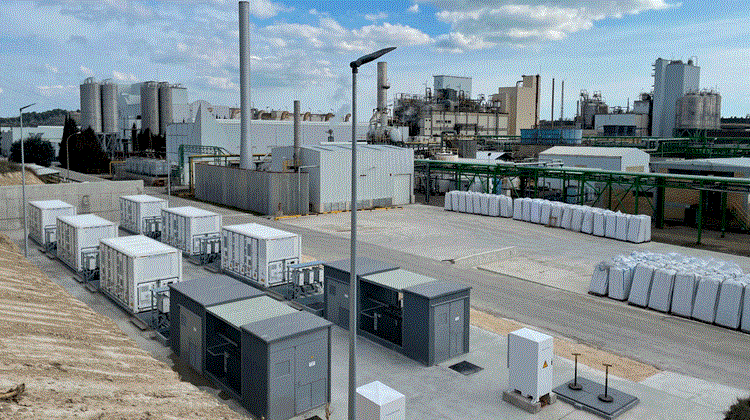
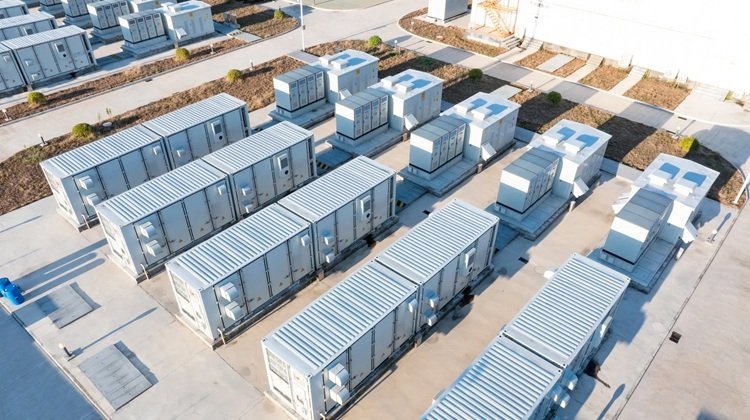
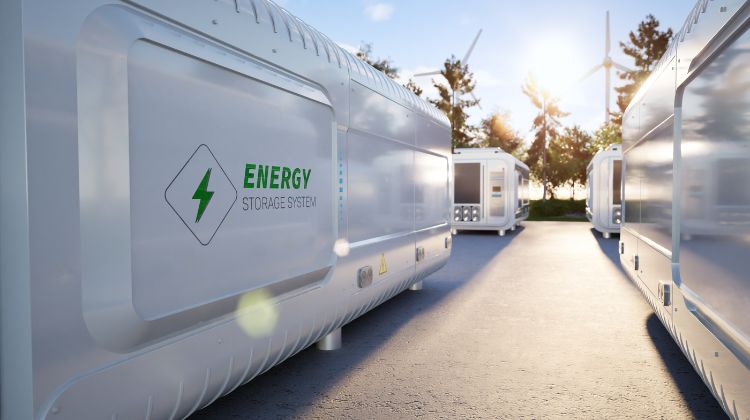
This last element is pivotal. According to an analysis by AABI Group, the new legal framework enables ETED to deploy stand-alone battery energy storage systems (BESS)—that is, grid-connected batteries operating independently from generation plants—directly on the transmission network.
“The legal framework already allows ETED to incorporate BESS without amending existing laws. Batteries can operate as public ancillary services under ETED’s direct management,” the specialised consultancy assessed.
In other words, these solutions are not only compatible with the current regulatory environment but also address operational constraints and improve overall system efficiency.
Storage as a transmission asset
AABI Group underlines that “the incorporation of storage systems as transmission assets helps resolve technical limitations in the system”.
BESS can store electricity during periods of low demand and release it during peak hours, while also providing resilience against contingencies, renewable variability and frequency drops—capabilities that are increasingly valuable as variable renewable energy scales up.
The debate has gained further momentum following the publication of Resolution SIE-017-2026-MEM by the Superintendencia de Electricidad. The regulation establishes a methodology for assessing regional power exchange capacity and acknowledges that current system operations face stability challenges, with economic and service-quality impacts.
The regulator’s methodology incorporates hourly analysis models, power-flow simulations and demand and renewable generation growth scenarios. One of its stated objectives is to identify congestion points, bottlenecks and the need for solutions such as “storage, reactive power or network reinforcements”, as outlined in the official document.
Within this framework, BESS emerges as one of the most relevant tools, particularly in areas with high renewable variability or sensitivity to load changes. AABI Group notes that these systems can be deployed “at nodes with favourable grid conditions and energy costs”, maximising both technical and economic benefits.
Financing and execution without legislative hurdles
Decree 55-26 also allows ETED to finance these activities through its own resources, state contributions, service revenues or international cooperation. Crucially, the company no longer requires legislative authorisation to develop projects that fall within its corporate mandate—such as transmission-connected battery systems.
As a result, the Dominican Republic now has a legal, technical and regulatory foundation to move forward with energy storage solutions without modifying its existing framework. Whether and how quickly these projects are implemented will depend on ETED’s operational planning and the strategic priorities set by the Ministerio de Energía y Minas.
As the SENI continues to integrate higher shares of variable renewable energy, storage will become a cornerstone asset to ensure system security, continuity and efficiency. The Dominican Republic now has the framework in place to make that transition possible.