











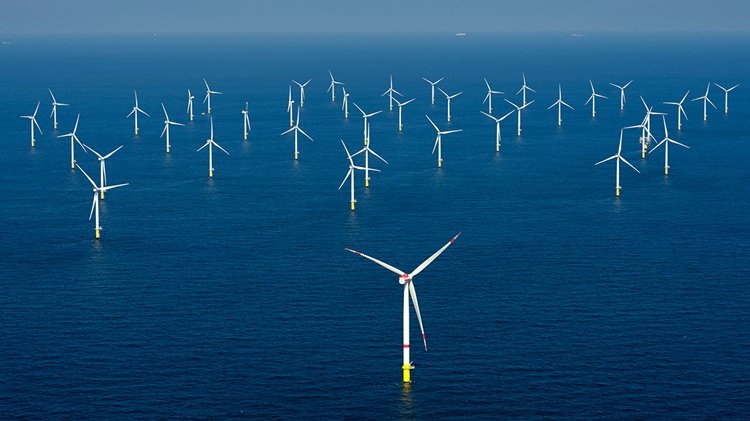
Spain has formally taken its first step towards launching offshore wind through a public consultation on the country’s inaugural auction scheme. The process was opened by the Ministry for the Ecological Transition and the Demographic Challenge (MITECO), which will accept input from companies, industry associations and public authorities until 24 February.
The consultation aims to shape the final design of a competitive auction mechanism for offshore wind generation, marking the starting point for the large-scale deployment of this technology in Spanish waters.
According to the draft proposal, the auction will be based on a two-sided Contract for Difference (CfD) with physical delivery, while also introducing non-economic evaluation criteria. These include environmental impact, job creation and local industrial development, moving beyond purely price-based allocation models.
The official document confirms that the process will be exclusively focused on floating offshore wind, reflecting Spain’s deep-water seabed conditions, which limit the feasibility of fixed-bottom foundations across most coastal areas.
The announcement comes more than a year after Spain approved its legal framework for offshore wind, and just months after the entry into force of Royal Decree 962/2024, which regulates renewable electricity generation from maritime installations. Together, these measures complete the regulatory architecture required to unlock competitive tenders and investment decisions.
Across Europe, offshore wind capacity has already reached around 37 GW, largely based on fixed-bottom technology. In Spain’s case, the Offshore Wind Roadmap sets a target of 1–3 GW of installed capacity by 2030, a goal that will depend directly on the auction calendar and the execution of projects currently awaiting permits.
In parallel with the auction design, the Spanish government has activated several industrial support schemes to prepare ports and logistics for offshore wind deployment.
Key initiatives include PORTS 5.0 and EOLMAR, managed by Puertos del Estado and the Institute for the Diversification and Saving of Energy (IDAE), and funded through the Recovery, Transformation and Resilience Plan (PRTR).
Together, these programmes mobilise more than €200 million to support innovation, port digitalisation, renewable energy integration and the development of offshore-ready logistics infrastructure. The funding is intended to upgrade quays, assembly areas and operational surfaces, as well as to facilitate manufacturing, pre-assembly and installation activities.
Regions and industry demand clarity
For more than a year, both private developers and regional governments have been urging the central administration to define the first auction, warning that regulatory uncertainty was freezing strategic investments.
Galicia has been one of the most vocal regions, calling for a clear auction timetable aligned with the gradual phase-out of thermal power plants. The Canary Islands, meanwhile, have positioned themselves as a strategic hub for pilot projects, thanks to favourable wind conditions, a high-cost isolated power system and prior experience with renewable technologies.
During FES Iberia 2025, a leading energy transition forum, regional authorities reinforced this message. Pablo Fernández Vila, Director General for Energy Planning and Mining of the Galician regional government, stated: “In Galicia, we want to participate in Spain’s first offshore wind auction.”
Similarly, Alberto Hernández Suárez, Director General for Energy of the Canary Islands Government, underlined the region’s ambition to lead offshore wind development in Spain and called for immediate regulatory action. Offshore wind will remain a central theme at FES Iberia 2026, scheduled for 12 February in Madrid.
More than 40 offshore wind projects already in the pipeline
According to research by Energía Estratégica, over 40 offshore wind pre-projects are currently undergoing administrative processing in Spain, representing a combined capacity of more than 20 GW.
This growing pipeline highlights the sustained interest of the private sector, which has been waiting for auction rules to move forward with permits, environmental impact assessments and financial commitments.
Projects are spread across Galicia, the Canary Islands, Catalonia, Andalusia, the Valencian Community and the Balearic Islands, and are being promoted by major international and domestic players, including Iberdrola, BlueFloat Energy, Ocean Winds, Capital Energy, Greenalia, Naturgy, Cobra, Acciona, Saitec, Vestas, RWE and TotalEnergies, among others.
In Galicia, one of the regions with the strongest industrial outlook, Greenalia’s Nordés project stands out, with 540 MW planned off the northern coast. BlueFloat Energy and Capital Energy have also submitted applications for developments along the Galician shoreline.
The Canary Islands host several strategic proposals, including the Granadilla Offshore project (240 MW), promoted by Naturgy and Cobra. Other developers such as Plenitude, BlueFloat Energy and Capital Energy are also seeking permits for floating platforms in the archipelago.
In Catalonia, the Tramuntana Offshore Wind Farm, developed by BlueFloat Energy and Cobra, is among the most advanced projects in the country, with an estimated capacity of 500 MW, positioning it as a strong candidate for the first auction.
In Andalusia, Iberdrola has registered the Costa Afuera project, still at an early stage but strategically attractive due to its proximity to industrial ports and grid access.
The Valencian Community and the Balearic Islands are also part of Spain’s offshore roadmap, with floating wind initiatives promoted by the BlueFloat–Vestas alliance, targeting areas close to logistics hubs and high-demand centres.
With the public consultation now officially open, Spain has activated the long-awaited mechanism for its offshore wind value chain. The rules are starting to take shape, investment capital is ready, and the countdown to the country’s first offshore wind auction has begun.