












Colombia has launched a new long-term power auction that overhauls key elements of previous designs, seeking to address the challenges faced by the 2019 and 2021 tenders. Among the most significant changes are the inclusion of energy storage as a central technology, products tailored to real-world generation profiles, and an extended obligation horizon running to 2035. Together, these measures are intended to improve project bankability and competitiveness.
According to Álvaro Pérez Ramírez, Manager at AFRY, the new mechanism offers greater flexibility for generators and introduces a more sophisticated design. Allowing bidders to declare real hourly generation curves, integrate battery storage, and benefit from longer lead times directly addresses the bottlenecks that affected earlier projects—many of which failed to reach operation due to delays in permitting, transmission build-out and financial close.
“Building large-scale renewable energy projects in Colombia takes longer than initially anticipated in the early auctions,” Pérez Ramírez noted, pointing out that previous conditions did not reflect the true maturity of the local market or the regulatory timelines required for major infrastructure works.
In this context, the extended deadlines help align contracts with realistic development cycles, reducing penalty risks and boosting confidence among international investors.
Experience gained over the past seven years highlighted the need to redesign the auction scheme—not only to ensure awarded projects are actually built, but also to enable more efficient grid integration.
Under the previous model, flat energy blocks provided certainty to offtakers but penalised technologies such as solar PV, whose output naturally varies throughout the day. The new auction allows participants to submit real generation curves and introduces specific products, including solar PV plus battery hybrids aimed at covering demand between 17:00 and 21:00—one of the most critical periods for the Colombian power system.
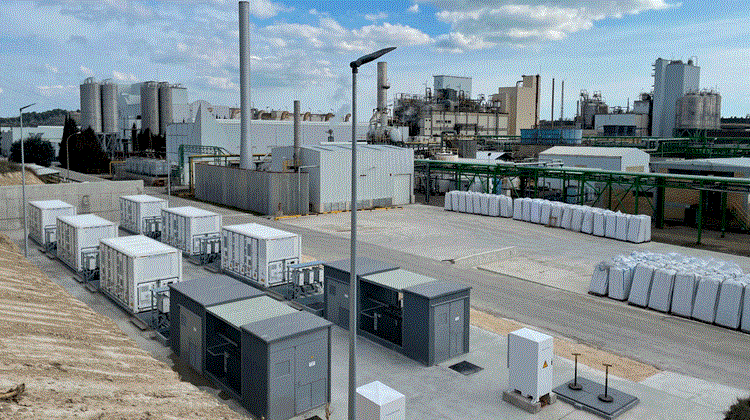
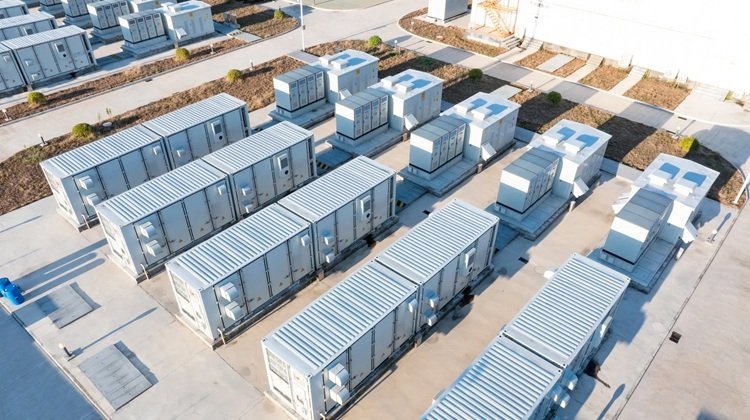
This technical differentiation also treats energy storage systems as stand-alone solutions. A utility-scale battery project can shift electricity from low-price hours to peak demand periods, enhancing system reliability while also reducing emissions by displacing fossil-fuelled generation during peak times.
The new framework, therefore, marks a turning point in recognising storage not merely as a renewable back-up, but as a reliability asset in its own right.
“There is a clear intention for battery storage to become a central component of the generation mix,” the AFRY executive stressed.
Regulation, price signals and remaining challenges
A key step in this direction was the publication of CREG Resolution 701 103 of 2025, which establishes a regulatory framework for Battery Energy Storage Systems (BESS). However, further work is still needed, particularly regarding dispatch rules, imbalance settlement and the participation of storage in ancillary services markets.
Transmission infrastructure remains another structural risk. Persistent delays in grid expansion could once again leave projects stranded without connection, as seen in previous auction cycles.
On pricing signals—one of the most technically sensitive aspects of the auction design—Pérez Ramírez warned that price caps must be flexible enough to accommodate storage technologies. Batteries rely on energy arbitrage, charging during low-price periods and discharging during high-price hours, which typically coincide with moments of greatest system stress. Artificially capping peak prices could undermine the economic case for storage and limit its deployment.
Finally, institutional stability remains essential to sustain investment. “If the rules change every few years, investment will pull back,” Pérez Ramírez cautioned.
Overall, Colombia’s new long-term auction represents an effort in institutional learning, aiming to build a more robust, predictable and technically aligned power contracting ecosystem in line with the challenges of the energy transition. The market’s response—both from developers and demand-side participants—will determine whether this more complex design can deliver the desired transformation.