











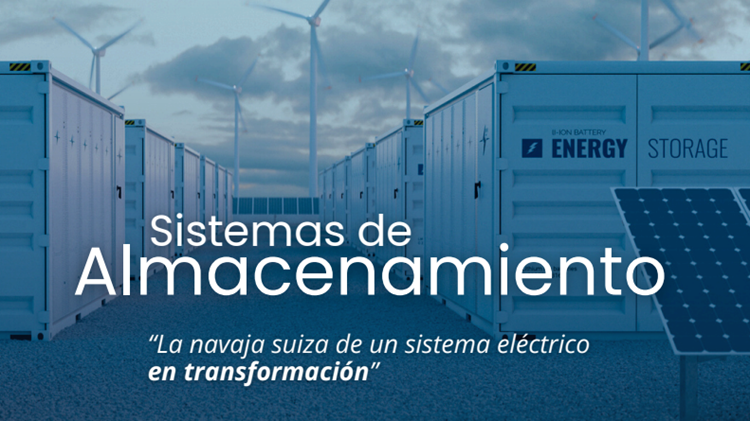
The Chilean Association of Renewable Energy and Storage, ACERA, has released the report “Energy Storage in Chile: the Swiss Army Knife of a Power System in Transition”. The publication consolidates ACERA’s position on the strategic role of energy storage in Chile and its importance for ensuring system stability, financial sustainability and long-term investment in an electricity market increasingly dominated by renewable generation.
The report is structured around five core pillars:
-
Energy storage as a system asset, providing energy, adequacy, flexibility, ancillary services and resilience.
-
Impact on the financial sustainability and bankability of renewable energy projects.
-
Review of the regulatory framework, economic signals and existing gaps.
-
Real-world and comparative performance cases.
-
Investment opportunities, scaling-up potential and regional integration.
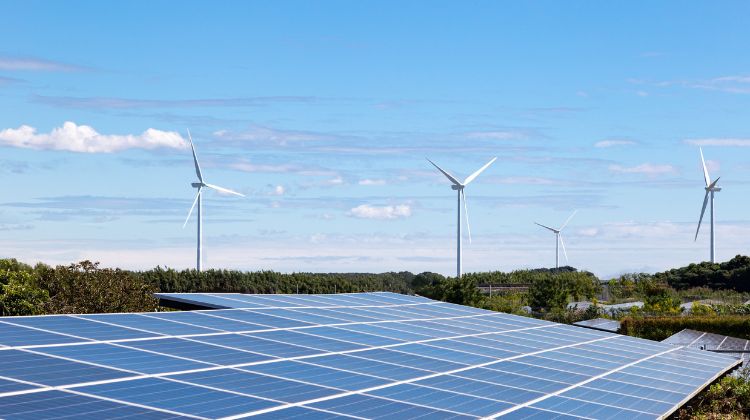
In a context where electricity prices can be depressed, and renewable curtailment continues to rise, energy storage is emerging as a critical tool to stabilise revenues, reduce exposure to operational and commercial risks, and transform intermittent generation into a more dispatchable and manageable power supply.
According to the report, in 2025, wind and solar curtailment reached 6,084 GWh, an 8% increase compared to 2024. This volume is equivalent to the annual electricity consumption of 2.3 million households and represents almost 19% of total wind and solar generation for the year.
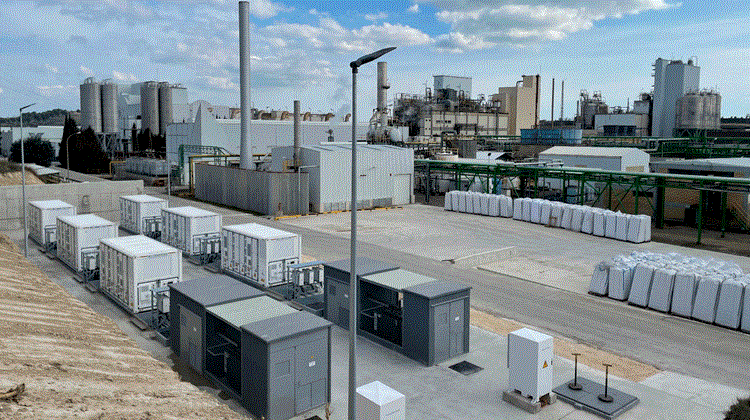
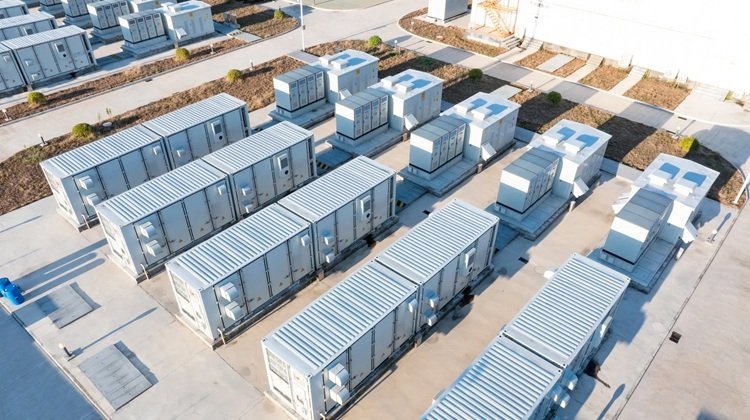
Battery energy storage systems (BESS) have therefore become a cornerstone in addressing system constraints. Chile currently has around 9 GW of storage projects that are operational, under construction or in testing, in addition to a further 27 GW at different stages of development.
Current status of energy storage projects in Chile:
-
28 projects in operation: 1.6 GW, with an average duration of 4.1 hours.
-
6 projects in testing: 0.7 GW, with an average duration of 3.6 hours.
-
68 projects under construction: 6.8 GW, with an average duration of 4.4 hours.
-
14 GW of storage projects with approved environmental permits.
-
13 GW of storage projects are currently undergoing environmental assessment.
“We are optimistic about what will come from the deployment of storage. We will see better system performance, less congestion and lower internal costs, which will undoubtedly support a more competitive power generation sector and better prices for end consumers,” said Sergio Del Campo, president of ACERA, referring to the growing role of energy storage in Chile.
Industry representatives also stressed earlier this year that, although curtailment increased even after storage systems entered the market, without BESS the volume of curtailed renewable generation would have been significantly higher, underscoring the technology’s systemic value in a rapidly evolving electricity system.