











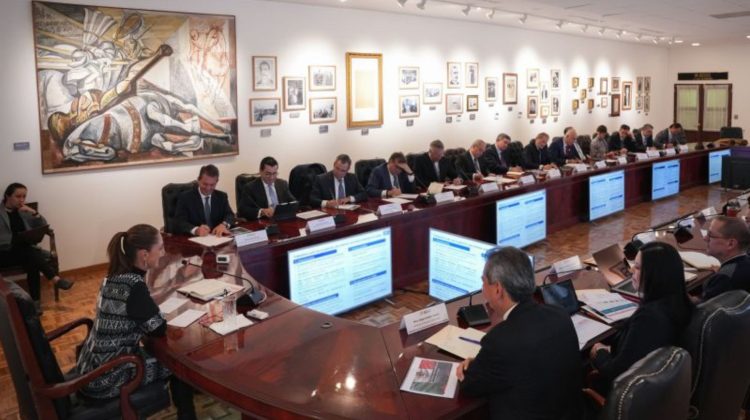
The Mexican government has rolled out a coordinated strategy to strengthen its energy policy and mobilise private capital towards key electricity infrastructure projects. On 27 January, President Claudia Sheinbaum held a meeting at the National Palace with representatives of the Asociación de Bancos de México (ABM), including senior executives from BBVA, Banamex, HSBC, Bank of America México, Monex and Bx+.
According to sources present at the meeting, the president asked banks to “prepare financing schemes for projects that will be announced in the coming days”. These initiatives are expected to cover renewable energy generation and new power transmission works, both considered critical to easing grid bottlenecks and improving system integration.
One day later, on 28 January, the Comisión Federal de Electricidad (CFE) published in the Official Gazette the Guidelines for Mixed Development Schemes, formally enabling new partnerships with the private sector for electricity generation projects, related infrastructure and energy storage.
A new framework for public–private cooperation
The regulatory framework establishes three award mechanisms: public tender, restricted invitation and direct award, each with specific technical and financial procedures. CFE stresses that “the competitive process provides an opportunity to improve conditions for the State and for CFE, without altering the original technical specifications”.
Under these mixed contracts, private partners will be able to share costs, investment and risk, provided that projects ensure sustainable financial returns and comply with criteria of reliability, safety, accessibility and sustainability of Mexico’s National Electricity System.
The required economic model must include discounted cash flow analysis, internal rates of return (IRR), payback periods and sensitivity analyses of key variables—standards aligned with international project finance practices in renewable energy and grid infrastructure.
To approve each initiative, a Mixed Development Group (GDM) will be set up, bringing together representatives from CFE, the Ministry of Energy (SENER) and the Ministry of Finance. This body will assess the technical, operational, financial and socio-environmental viability of each project. The guidelines specify that contracts must include clauses covering legal structure, financing, rights and obligations, governance mechanisms and dispute resolution.
In all mixed investment schemes, CFE must retain at least a 54% equity stake, ensuring state control. In addition, project structuring costs must be covered by the agreed financial scheme and may not generate off-balance-sheet commitments beyond the approved model.
In line with federal priorities, projects must be integrated into binding power system expansion plans and comply with operational reliability standards, technological efficiency requirements and social responsibility criteria. Developers will also be required to submit maintenance and technology upgrade plans, as well as quarterly economic and technical performance reports, overseen by supervisors appointed by CFE.
This dual move—political engagement with the banking sector and the formal launch of a new regulatory framework—marks a turning point in Mexico’s energy policy. The government is seeking to position the domestic financial system as an active participant in the energy transition. From the presidency, the message was explicit: “The financial system must be an ally of major infrastructure and energy projects.”
The strategy comes amid a challenging economic backdrop, characterised by slower growth, international trade tensions, increases in fuel excise duties (IEPS) and the persistent use of cash in the economy. Against this context, the government argues that expanding green infrastructure—renewable energy, energy storage and grid reinforcement—can become a driver of investment and long-term structural modernisation.
Recent tenders and market outlook
The government is also yet to launch its second private-sector call for proposals, originally scheduled for January, following a first award round that generated positive expectations across the renewable energy sector due to its speed and operational certainty.
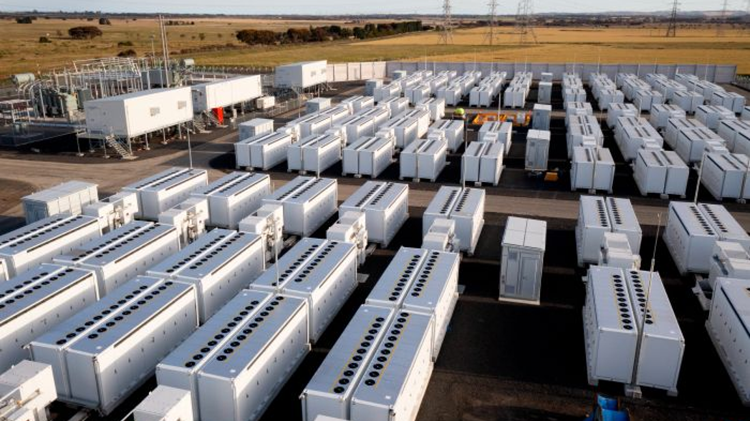
In that initial process—focused on clean generation and battery energy storage—more than 3.32 GW of renewable capacity and 1.49 GW of battery systems were awarded. The investments reflected renewed international interest in the Mexican market, including participation by subsidiaries of major global energy groups.
By integrating private capital under clear rules and stringent technical criteria, CFE’s mixed contracts are emerging as a new vehicle to attract investment and accelerate the deployment of strategic assets for Mexico’s clean energy transition, including renewable energy generation, grid integration and energy storage.