












Mexico is entering a pivotal phase in the transformation of its energy and digital infrastructure. The growth of digital services and the rise of artificial intelligence are fuelling a race to deploy large-scale data centres, which could require up to 1.5 gigawatts (GW) of electricity by 2030 dedicated solely to these facilities. This expansion is expected to mobilise more than US$18 billion in investment over the next five years, redefining the balance between power demand, sustainability and regional competitiveness.
According to the Asociación Mexicana de Data Centres (MEXDC), the sector’s growth will only be viable if electricity transmission networks and energy availability are significantly strengthened.
“The country needs to build connectivity and power supply infrastructure in advance, or it will miss a strategic opportunity for economic and technological development,” the association warns.
At present, Mexico has 250 MW of data centre capacity in operation and 74 MW under construction—figures that represent only a fraction of what will be required by the end of the decade. MEXDC estimates that total installed capacity will need to increase sixfold by 2030 to keep pace with the expansion of critical digital infrastructure.
“The challenge is not only energy-related; it is also regulatory, logistical and environmental,” the association adds.
Mexico currently hosts 14 operational data centres, according to Data Centre Map. The state of Querétaro has emerged as the epicentre of this fast-growing ecosystem. Official figures show that energy demand linked to data centres in the state already exceeds 200 megawatts (MW), driving a rapid rollout of industrial parks designed to host digital infrastructure.
“Pressure on the power grid is constant, which is why we are working to expand supply capacity,” officials from Querétaro’s Ministry of Sustainable Development have said.
The trend is also spreading quickly to regions such as Nuevo León and Jalisco, where favourable conditions converge, including strong connectivity, land availability and proximity to industrial hubs.
Global players and rising standards
Major technology companies and operators—including Microsoft, Google, Amazon, KIO Networks, ODATA, Equinix and Ascenty—already have projects under development or in the planning stage.
Their scale is accelerating sector growth while also introducing stricter energy efficiency benchmarks and sustainability requirements, increasing pressure on Mexico’s electricity system to modernise.
In parallel, the state-owned utility Comisión Federal de Electricidad (CFE) is carrying out projects to reinforce electricity supply in the Bajío region. The aim is to meet rising demand from cloud services, artificial intelligence and edge computing, and to position Mexico as a regional digital hub.
Some companies are already moving ahead with high-impact projects. Scala Data Centres, for example, has announced a US$80 million investment to build its first campus in the country. Located in Querétaro, the facility will start with 5 MW of capacity, scalable up to 28 MW, and will operate entirely on certified renewable energy.
“This is the first of several steps in our sustainable expansion strategy in Latin America,” the company said.
Environmental commitments are becoming increasingly central as electricity consumption rises. Many data centre operators had pledged to run on green power before 2025, but now face the challenge of meeting those targets amid surging demand. Analysts warn that without a timely renewable supply, digital expansion could end up increasing the use of fossil fuels.
Renewable momentum in Mexico: public and private plans
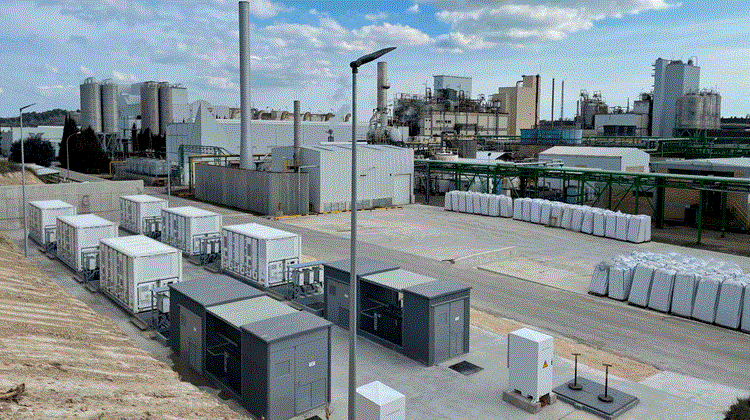
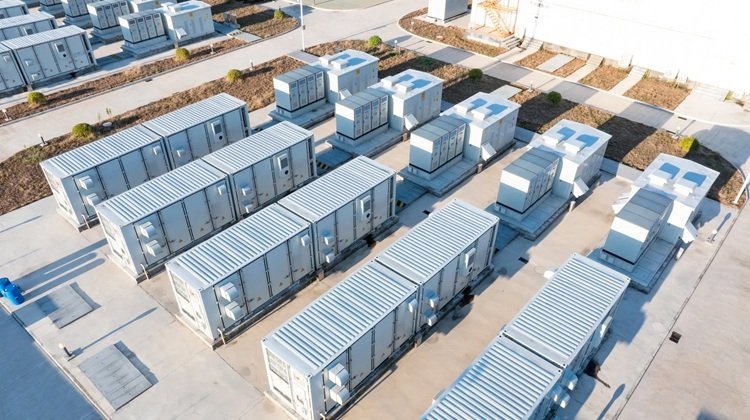
Recently, the Mexican government launched a call for private-sector participation, awarding more than 3.3 GW of new renewable capacity alongside 1,257 MW of battery energy storage systems (BESS). Projects led by global players such as Iberdrola, Sunstone Power—backed by Copenhagen Infrastructure Partners—and Dhamma Energy are expected to strengthen grid resilience during peak demand periods, including those driven by hyperscale data centres.
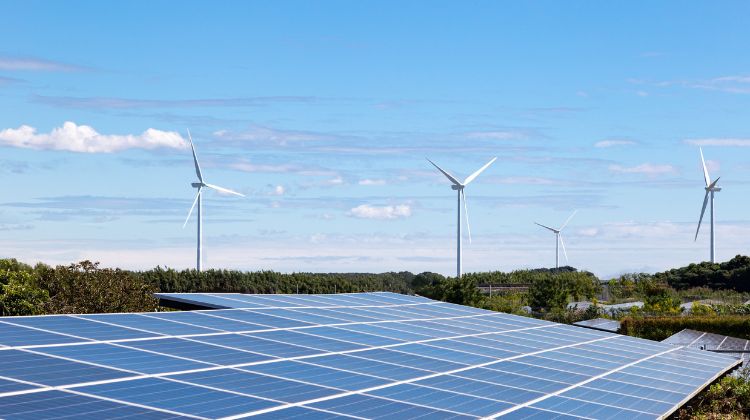
From the public side, CFE is also advancing an expansion plan that includes more than 1.5 GW of new renewable generation and storage, with investments exceeding 29 billion Mexican pesos. Flagship initiatives include the expansion of the Puerto Peñasco solar complex to 1 GW with battery support, as well as new hybrid projects in states such as Coahuila. In addition, the utility has 66 transmission projects scheduled for 2025–2026, aimed at ensuring grid stability in high-tech demand regions.
“The opportunity is there, but it requires immediate action,” MEXDC stresses.
The convergence of fast-growing power demand, multi-billion-dollar investment and mounting pressure to decarbonise presents Mexico with an unprecedented challenge—and opportunity. The key question remains: can the country turn its digital boom into a catalyst for accelerating the transition to renewable energy?