











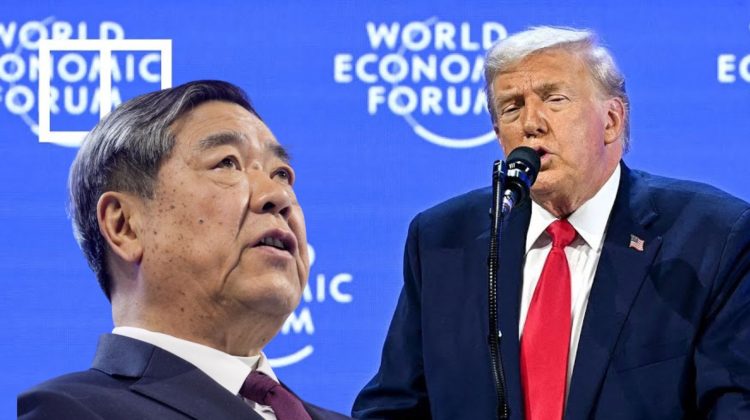
The 2026 Davos Forum placed wind power at the center of a growing political and ideological confrontation between the United States and China, highlighting sharply different approaches to the global energy transition.
Speaking at the event, Donald Trump accused China of selling wind turbines abroad while allegedly avoiding their use at home. He described countries that purchase Chinese turbines as “stupid” and claimed they are “destroying their landscapes and killing birds.”
Although Trump said he maintains a good personal relationship with China’s leadership, he sharply criticized what he framed as a hypocritical economic strategy. “They don’t use them. They sell them so others can build wind farms. That’s how they make money,” he said.
From Beijing, He Lifeng, Vice Premier of China, pushed back against the accusations. He stated that “China has built the world’s largest renewable energy system and the most complete new energy industrial chain,” reaffirming the country’s commitment to reaching carbon neutrality before 2060.
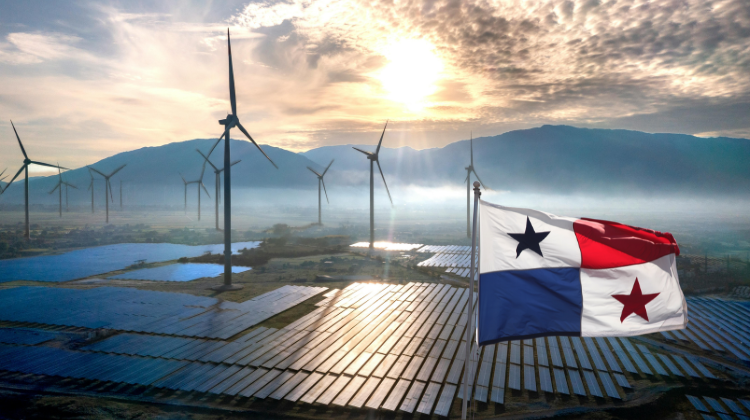
These remarks carry weight given that China has ranked first globally in installed wind power capacity for the past 15 years. The country operates dozens of large-scale wind farms, including a massive complex in the Gobi Desert, widely regarded as the largest in the world. Chinese authorities used the Davos platform to invite global companies to partner with China on green infrastructure and clean energy technologies.
Trump, however, reiterated that the United States is “getting rid of wind farms,” echoing the energy policy direction he promoted during his presidency. He also criticized the economics of clean energy, arguing that “energy should be about making money, not losing it.”
Under that premise, he cited Germany and the United Kingdom as examples of misguided policies, claiming their electricity prices surged due to heavy reliance on wind power.
Yet recent developments contradict this stance. Days before Davos, a federal judge in Washington approved the resumption of the Empire Wind offshore project, developed by the Norwegian energy group Equinor.
The project—previously suspended under the Trump administration—will be developed in two phases totaling 2.1 GW. It is set to become the first offshore wind farm to deliver electricity directly to New York City, with enough capacity to power around 500,000 homes by the end of 2027.
Meanwhile, the era of ultra-cheap solar panels is also coming to an end. China confirmed it will eliminate value-added tax (VAT) rebates on photovoltaic exports starting April 1, 2026. As a result, global solar module prices are expected to rise by up to 15% in 2026, directly impacting renewable energy supply chains worldwide.
This new landscape raises critical questions about the pace, cost, and affordability of the global energy transition.
Europe doubles down on clean energy
Europe, for its part, is reinforcing its push for energy sovereignty through an accelerated clean energy strategy. Ursula von der Leyen, President of the European Commission, warned that “energy is a bottleneck for both businesses and households” and called for the creation of a “true Energy Union.”
She detailed massive investments in interconnectors and power grids to scale up local, nuclear, and renewable generation, aiming to “lower prices, cut dependencies, and end market volatility.”
Von der Leyen also emphasized that Europe is “home to global champions in renewable energy and battery technologies,” urging policymakers to adopt a “sense of urgency” to avoid losing competitiveness in strategic sectors such as energy storage, electric mobility, and defense.
The current tension over clean energy did not originate in Davos. It reflects a broader geopolitical crossroads shaped by the growing use of trade instruments in the race for global energy leadership.
In April 2025, Trump enacted a package of so-called “reciprocal” tariffs affecting nearly 100 countries, pushing U.S. import duties to levels unseen since World War II. The scheme imposed tariffs of 104% or more on Chinese exports, while also impacting the European Union, Southeast Asia, Mexico, and Mercosur countries.
For Latin America, the generalized surcharge reached 10%, while EU exports faced 20%, and tariffs exceeded 45% for Vietnam, Laos, and Cambodia.
As China and Europe consolidate their industrial strategies around the energy transition, the Republican wing of the United States—led by Trump—has intensified its rhetoric against clean energy. Still, in practice, key renewable projects continue to move forward, underscoring the contradictions at the heart of the global energy debate.