











A broad coalition of European energy, industrial and technology associations has sent a joint letter to the European Commission urging the bloc to accelerate the deployment of long-duration energy storage (LDES) through a tailored regulatory, market and investment framework.
The signatories—representing energy developers, technology manufacturers and major electricity consumers—argue that LDES is essential to ensure security of supply and system reliability as Europe transitions toward a power system dominated by variable renewable energy such as solar PV and wind power.
Among the organizations backing the initiative are Energy Storage Europe, Cleantech for Europe, Eurelectric, the Global Renewables Alliance, the World Business Council for Sustainable Development, Future Cleantech Architects, the Long Duration Energy Storage Council, Flow Batteries Europe and EnergyTag.
Addressed to several Executive Vice-Presidents and Commissioners of the European Union, the letter stresses that achieving a clean, competitive and resilient energy system requires solutions capable of delivering reliable electricity and heat over extended periods—ranging from several hours to multiple days or even entire seasons—particularly during periods of low renewable generation.
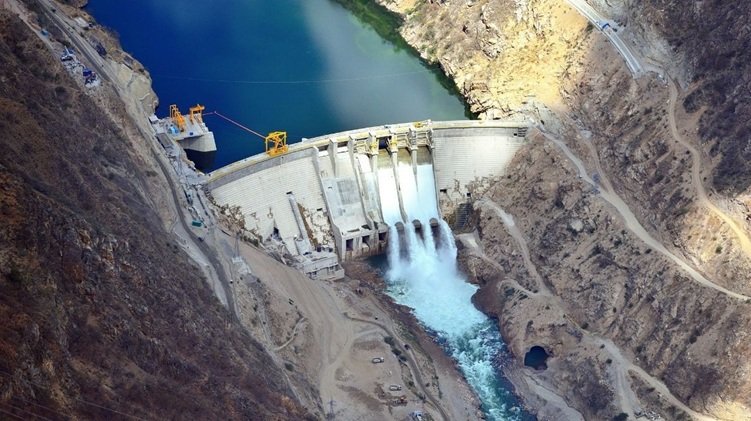
LDES refers to a broad family of technologies able to store energy in chemical, electrochemical, mechanical or thermal forms and discharge electricity over long durations. These include pumped hydro storage (PHS), gravity-based systems, compressed air energy storage (CAES), liquid air energy storage (LAES), compressed gas energy storage (CGES), thermal energy storage (sensible, latent and thermochemical), electrochemical technologies such as flow and metal-air batteries, as well as chemical storage pathways based on power-to-gas-to-power, including hydrogen and synthetic fuels.
By converting variable renewable generation into firm, dispatchable energy, LDES helps maintain system adequacy during prolonged renewable droughts. According to the signatories, this reduces reliance on fossil backup capacity, limits renewable curtailment, defers costly grid reinforcements and supports industrial electrification—ultimately delivering security of supply at the lowest system cost.
Despite its strategic importance, the deployment of long-duration storage in Europe remains far below what the future power system will require. The letter points to structural shortcomings in system planning, market design, investment frameworks, taxation and grid tariffs.
Current regulatory and market frameworks, the authors argue, are largely insensitive to storage duration, favoring short-duration flexibility while failing to create viable business cases for multi-hour and multi-day storage assets. Closing this gap will require a sequenced and coordinated policy approach, aligned with existing EU legislation and implementation processes.
The coalition outlines four core areas where immediate action is needed:
1. Integrate LDES into system planning and adequacy assessments
European and national resource adequacy assessments—such as the European Resource Adequacy Assessment (ERAA)—should explicitly evaluate long-duration flexibility needs using energy-based metrics (GWh) and realistic climate, demand and renewable generation scenarios. National Energy and Climate Plans (NECPs) should translate these findings into duration-sensitive deployment targets, while LDES should be fully considered as a non-wire alternative in grid development plans under the TEN-E framework.
2. Reform ancillary services markets, grid tariffs and taxation
As conventional synchronous generation exits the system, grid operators will increasingly rely on new sources of inertia, voltage control, congestion management, system restoration and multi-hour reserves. Existing ancillary services markets—largely designed for fossil-based systems—do not yet reflect these needs.
The signatories call for technology-neutral market products for long-duration reserves and grid-forming capabilities, aligned with the EU Electricity Market Design (EMD) reform. They also urge Member States to eliminate discriminatory grid charges and double taxation practices that penalize storage, ensuring cost-reflective treatment in line with EU regulation.
3. Align capacity mechanisms with adequacy outcomes and State aid rules
Capacity mechanisms are expected to play a growing role across Europe, particularly following updates to ERAA methodologies and the introduction of the Clean Industry State Aid Framework (CISAF).
While some LDES technologies may operate in energy-only markets under favorable conditions, most long-duration assets face revenue volatility and long development timelines. Duration-sensitive capacity remuneration—based on both power (MW) and energy (MWh), asset lifetimes and, where appropriate, locational signals—would allow LDES to compete on equal footing with other firm resources while remaining compliant with EU State aid rules.
4. Deploy dedicated investment instruments and enable long-term contracting
Given their capital-intensive nature and long operational lifetimes, LDES projects require investment frameworks that reduce financing costs and improve revenue certainty. Building on tools such as the Innovation Fund, CISAF and national financing schemes, the letter calls for targeted financial instruments to unlock large-scale deployment.
In parallel, barriers to long-term market-based mechanisms—such as 24/7 power purchase agreements (PPAs)—should be removed. These contracts can enhance long-term revenue visibility, enable industrial consumers to access firm clean power and complement, rather than replace, market revenues.
The letter concludes that long-duration energy storage is a cornerstone of Europe’s clean energy transition, industrial competitiveness and energy security. Aligning planning, markets, tariffs, taxation and investment frameworks with the physical realities of a renewables-based system is essential to avoid higher system costs, continued dependence on fossil backup and delays in decarbonization.
For this reason, the signatories urge EU institutions, national governments, regulators and system operators to fully integrate LDES into adequacy methodologies, electricity market reform, capacity mechanisms, grid tariff and tax reforms, and market-based procurement frameworks—ensuring Europe can deploy long-duration storage at the scale, speed and locations required.