











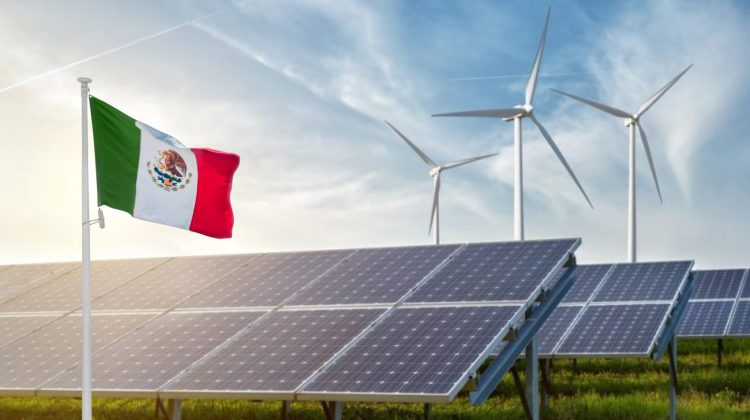
The Government of Mexico has confirmed that it will launch its second public tender for clean power generation and energy storage projects in January. Against this backdrop, renewable energy stakeholders are increasingly optimistic, buoyed by the results of the first round, which awarded 3.3 GW of renewable capacity and 1.2 GW of storage.
One of the most notable features of the initial process was its unprecedented speed. This was made possible by classifying the selected projects as strategic, allowing for clearly defined and significantly shortened timelines for permitting and construction.
“Permitting and grid interconnection processes that used to take two years were compressed into just two months. That gives a huge amount of certainty to financiers, developers and off-takers,” said Alejandro Robles, director of MRS Sustentables, in an interview with Energía Estratégica.
Building on this precedent, Robles expects stronger private-sector participation in the upcoming round. “This second phase will be very interesting. Some major players preferred to wait and see how the first one unfolded, and now they will step in. If improvements are introduced, it could be even more powerful,” he noted.
The companies behind Mexico’s award of 3.3 GW of renewables and 1.2 GW of battery storage
However, he stressed that consolidating the scheme and expanding its impact will require greater flexibility in technical, economic and regulatory aspects.
“It would be highly beneficial to have more flexibility in the tenders, especially regarding where projects can interconnect to the grid. For example, authorities could say: ‘We need power in the western region’, and also provide an estimated cost for macro-level grid reinforcements. That allows developers to optimise their projects and assess viability from the outset,” he explained. According to Robles, the absence of such information constrains efficient planning and limits the entry of new market participants.
“This is a dynamic process. It is a new law and, in many ways, a new sector. We are all learning as we go, and regulatory instruments need to reflect that by gradually incorporating flexibility,” he added. He also suggested allowing developers to propose technologies other than those initially specified for certain regions, provided they are technically and economically justified.
Robles was keen to clarify that these requests do not imply lowering standards. On the contrary, he argues that the first tender acted as a strong market filter, raising overall project quality.
“Only serious projects make it through. You need secured land leases, advanced grid interconnection studies, environmental and social impact assessments already filed, and the financial capacity to assume grid reinforcements that can cost hundreds of millions of pesos,” he said.
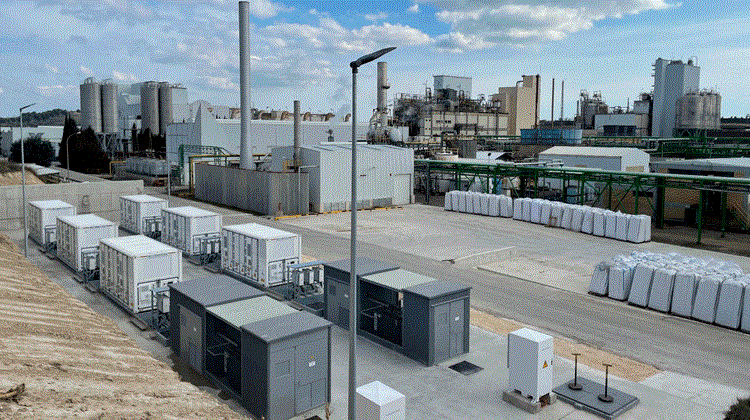
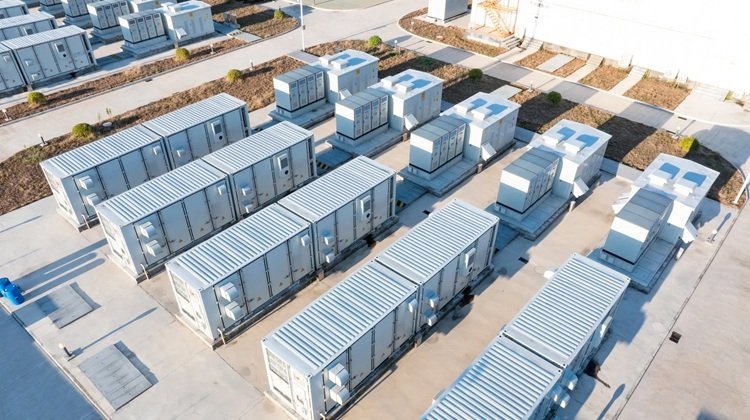
A key pillar of the scheme was the mandatory inclusion of energy storage. All awarded projects were required to integrate battery systems equivalent to 30% of nominal capacity, with three hours of backup for solar PV and four hours for wind power. As a result, between 3 and 4 GWh of battery energy storage systems (BESS) are expected to be installed.
“Energy storage is no longer optional. It has arrived, it will be deployed, and it will become part of the backbone of Mexico’s power system,” Robles stated.
Beyond utility-scale projects, Robles points to a broader reactivation across Mexico’s energy ecosystem. Demand for distributed generation has risen, particularly among industrial consumers, with a surge in projects below 20 MW.
At the same time, equipment suppliers, engineering firms, financial advisors and operations and maintenance (O&M) providers have begun to mobilise. “This is activating the entire ecosystem. It will create well-paid jobs and generate business opportunities for suppliers, technicians and recruiters,” he said.
Despite the positive signals, Robles acknowledged that several regulatory components remain unfinished. While the new Electricity Sector Law was published in March and its implementing regulation unveiled in October, key elements such as grid interconnection manuals, market rules and technical standards still need updating.
“Not everyone has the full picture yet. But overall, the signals from the authorities have been very positive,” he concluded.
Key figures from Mexico’s first clean energy tender
| Indicator | Result |
|---|---|
| Renewable capacity awarded | 3.3 GW |
| Energy storage awarded | 1.2 GW |
| Mandatory storage requirement | 30% of nominal capacity |
| Estimated BESS deployment | 3–4 GWh |
| Permitting timeline | Reduced from ~2 years to ~2 months |