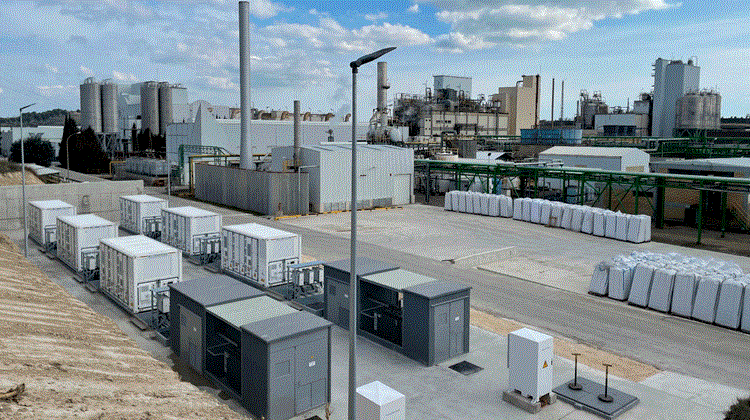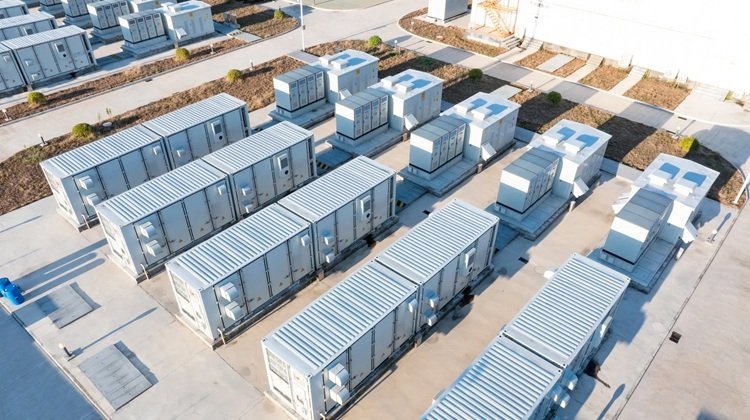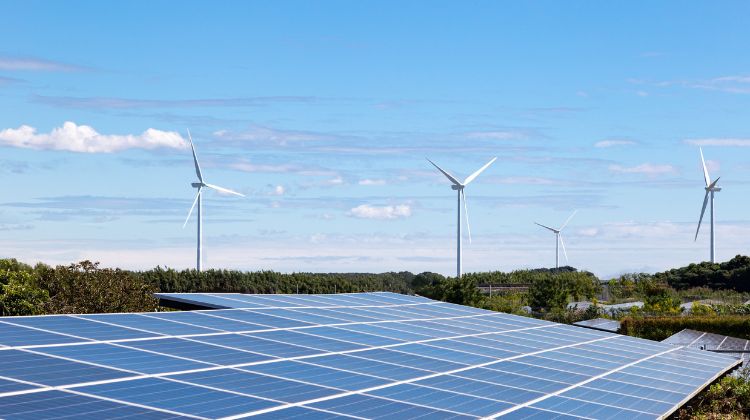












Energy storage is rapidly consolidating as a critical lever to enhance the profitability of solar PV projects in Spain. According to estimates from AleaSoft, integrating battery systems can increase revenues by up to 40%, allowing plants to operate more strategically and extract greater value from an increasingly volatile wholesale electricity market.
Antonio Delgado Rigal, CEO of AleaSoft, urges developers to move away from relying on average prices and instead analyse the shape of hourly price curves, gas-driven price peaks and their correlation with renewable generation in order to anticipate risks and maximise returns.
“By integrating batteries, a solar plant shifts to a far more active strategy based on arbitrage, risk management and volatility capture. The revenue profile changes radically: less dependence on cannibalised solar hours, greater exposure to high prices during peak periods, and a more diversified and stable income mix over time,” said Antonio Delgado Rigal.
“In practical terms, storage turns a solar plant into a dispatchable asset, with greater resilience to market changes and improved bankability,” he added in comments to Strategic Energy.
This new approach is not only about operational or financial optimisation, but also reflects a structural shift in how Spain’s wholesale electricity market is functioning. While average prices have remained relatively subdued in recent months, actual market behaviour is increasingly defined by rising hourly and intraday volatility.
This volatility is being driven by the rapid expansion of renewable energy, weak demand growth and still-limited interconnection capacity in Spain.
“The market has entered a phase where the average price is no longer the key signal. What really matters is price dispersion across hours and days,” Delgado Rigal stressed.
In this context, the central hours of the day are characterised by a surplus of solar generation that depresses prices, while periods without sun or wind remain dominated by gas-fired combined-cycle plants, pushing prices sharply higher.
Asked which indicators developers should prioritise to stay ahead of market changes, Delgado Rigal said it is no longer sufficient to track the average pool price. Instead, he recommends focusing on the hourly price profile and its volatility, which ultimately define a project’s true value.
“This is where value is created – or destroyed,” he said, highlighting the importance of analysing hourly and seasonal spreads, the correlation between prices and renewable output, and the evolution of the hours when gas plants set the marginal price, as these determine price peaks.
Operating in a market with such pronounced hourly dispersion and weather dependency requires more than a static or snapshot view of prices. Long-term hourly and quarter-hourly forecasts with associated probabilities are essential to assess different scenarios, anticipate risks and define realistic strategies.
This need is particularly acute for hybrid and storage projects, where economic value depends on the precise alignment between generation profiles, price signals and flexibility.
“In an increasingly complex market, these metrics and advanced forecasts are what allow developers to anticipate change and design projects that are genuinely viable over the long term,” Delgado Rigal emphasised.
Storage, grid services and regulation
Beyond price arbitrage, Delgado Rigal noted that storage systems also help smooth hourly prices and provide balancing and control services. “They reduce the need for combined-cycle plants to operate solely to ensure voltage control and grid stability,” he said.
However, he underlined that for storage to be truly profitable, regulatory frameworks must explicitly remunerate flexibility and system services beyond the energy-only market.
“There needs to be explicit remuneration for flexibility and system services: capacity, frequency regulation, voltage control and local grid services,” the AleaSoft CEO said, warning that without clear long-term regulatory signals, a large share of the potential value of storage assets could remain untapped.
In an increasingly unpredictable power market, AleaSoft positions itself as a strategic enabler for utilities, energy retailers, investment funds and developers. Through detailed scenarios for prices, demand and renewable generation, the company provides tools to structure power purchase agreements (PPAs), assess risk, optimise portfolios and improve project bankability.
“Our role is not to tell clients which decision to take, but to put numbers, probabilities and market coherence behind each alternative, so every stakeholder can decide with greater visibility and long-term confidence,” Delgado Rigal explained.
To do so, the firm relies on AleaModel, its proprietary forecasting system designed specifically for the energy sector. The model combines a Box-Jenkins SARIMA statistical framework with artificial neural networks, enabling it to capture seasonality, temporal dynamics and inter-variable market relationships.
“The model dynamically adjusts its parameters, making AleaModel an adaptive system capable of reacting quickly to shifts in trends and market context,” the executive noted.
Industry debate at FES Iberia 2026
Against this backdrop, the Future Energy Summit Iberia – Renewables & Storage 2026 is set to become one of the most relevant forums for debating energy storage and power pricing dynamics.
The event, scheduled for 12 February 2026 in Madrid, will bring together regulators, corporate decision-makers and technology leaders to address challenges and opportunities related to storage, renewable integration, new business models and the evolution of energy markets across the Iberian Peninsula.