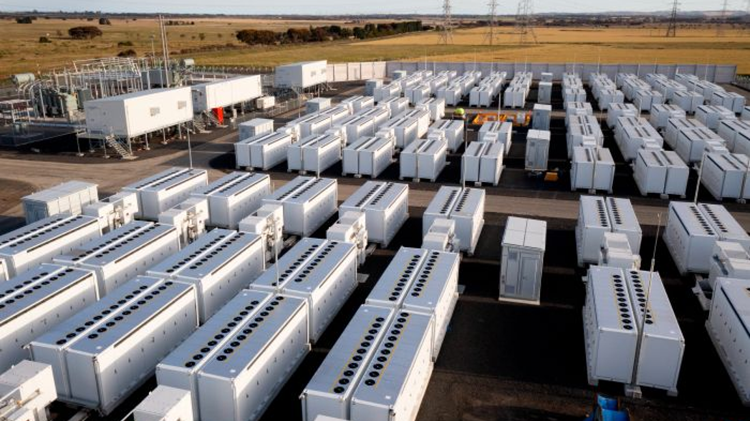










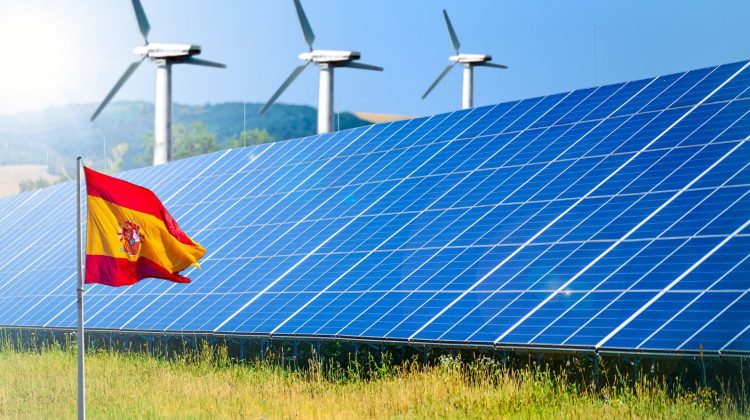
Spain has launched a series of funding calls mobilising €1.369 billion in public support for strategic projects under a multi-sector energy transition approach, covering energy storage, port infrastructure for offshore wind, industrial decarbonisation and energy efficiency.
The package consists of six active funding lines: PORT-EOLMAR (€212 million), Renewable district heating and cooling networks (€50 million), Replacement of fossil fuels in cogeneration and waste treatment (€50 million), RENOVAL II (€355 million), Energy efficiency and renewables in industry and services (€500 million), and the second call of the Incentive Programme for Innovative Renewable Energy and Energy Storage Projects (€202.5 million), launched by IDAE in late December.
Below is a detailed overview of each active funding line, including allocated budgets, eligibility criteria and application status.
The PORT-EOLMAR scheme allocates €212 million to investment projects aimed at adapting port infrastructure for the deployment of marine renewable energy, with a particular focus on floating offshore wind. The regional distribution includes €100 million for the Bay of Biscay and Atlantic Iberian coast, €82 million for the Mediterranean Sea and €30 million for the Canary Islands (Macaronesian Atlantic).
Funding is available exclusively to State Port Authorities, either individually or in joint applications. Projects must be completed within a maximum of 48 months, and no later than 31 December 2030. The application window runs from 28 January to 3 March.
This call is especially relevant given that more than a dozen offshore wind pre-projects in Spain remain stalled, awaiting auctions and regulatory definition. In this context, APPA Marina has urged the government to provide greater regulatory clarity and adopt urgent measures to prevent Spain from falling behind its European competitors.
The RENOVAL II programme mobilises €355 million to strengthen Spain’s domestic industry linked to the energy transition, supporting the manufacturing of clean technologies and components while reducing external dependency and creating green jobs.
Eligible applicants include manufacturing companies, large industrial players and SMEs supplying solutions in renewable energy, energy storage, energy efficiency, renewable hydrogen and smart grids. Applications may be submitted between 22 January and 25 February.
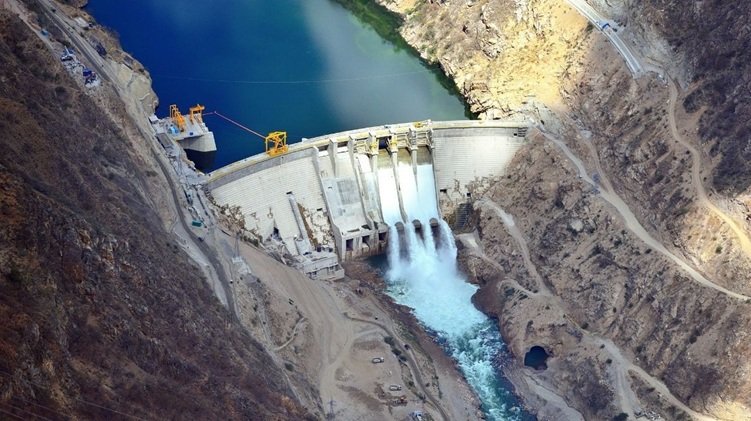
Pumped hydro energy storage
With a budget of €90 million, this funding line focuses on reversible pumped hydro storage, considered a strategic technology to provide flexibility and stability to the power system.
Applications can be submitted from 27 January to 26 February.
The scheme targets energy companies, technology consortia and system operators. Projects must include a technological innovation component and be aligned with national energy planning. Priority will be given to initiatives that enable greater integration of variable renewable energy sources—such as solar PV and wind power—and contribute to grid balancing under high-renewable penetration scenarios.
Energy efficiency and renewables in industry and services
In December 2025, Spain’s Energy Sectoral Conference approved the allocation of €500 million to regional governments to promote energy efficiency and renewable energy deployment across industrial and service sectors.
Each autonomous community will launch its own calls to implement the funds, prioritising projects that combine energy management improvements with the integration of clean technologies, including on-site renewable self-consumption, renewable thermal networks and process electrification.
Eligible actions include:
-
Industrial process optimisation
-
Efficient, renewable-based heating and cooling systems
-
Energy automation and digitalisation
-
Reduction of conventional electricity consumption
Eligible beneficiaries include industrial companies, service-sector facilities (such as hotels, hospitals and shopping centres), as well as logistics infrastructure. Regional calls are expected to open during the first half of 2026.
Renewable-powered heating and cooling networks
Another call, with a €50 million budget, targets the creation or expansion of renewable district heating and cooling networks, supplied by technologies such as biomass, geothermal energy and solar thermal.
Applications may be submitted between 21 January and 27 February.
Projects promoted by public, private or mixed entities are eligible, and funding covers the entire value chain: renewable heat generation, distribution infrastructure, thermal storage and connection points. Priority will be given to projects supplying heat to multiple buildings or public facilities.
In addition, a separate call focuses on the replacement of fossil fuels in cogeneration facilities and waste treatment plants with renewable technologies. This line has €50 million available, with applications open from 26 January to 2 March.
Eligible beneficiaries include public or private operators of high-efficiency cogeneration installations or energy-from-waste facilities. Eligible technologies include heat pumps, renewable thermal networks, direct electrification and renewable self-consumption.
Innovative renewable energy and storage projects (second call)
It is also worth noting that in late December, IDAE officially launched the second call of the Incentive Programme for Innovative Renewable Energy and Energy Storage Projects, with a total budget of €202.5 million.
The scheme supports solutions related to energy storage, sector coupling, agrivoltaics, distributed renewable generation and other technologies with low levels of commercial deployment. The application window runs from 14 January to 19 February.
All active calls operate under a competitive selection process and provide non-repayable grants, with aid intensities reaching up to 100% in certain cases, particularly for public or strategic projects.
The key challenge now will be to execute these funds efficiently and in a coordinated manner, addressing outstanding regulatory barriers and ensuring that investments deliver tangible impact.
Meanwhile, the private energy sector is awaiting critical regulatory decisions, especially in offshore wind and energy storage, to complement this public funding push with bankable and scalable projects.