











Genneia is preparing to reach a new milestone: exceeding 2 GW of installed renewable capacity in Argentina by the first half of 2026, while simultaneously advancing battery energy storage projects, power transmission works and electricity supply for large consumers such as data centres.
The company already leads the Argentine market with 1,540 MW in operation and a balanced pipeline split evenly between solar PV and wind power. This next phase of scale-up is taking place in an unprecedented financial environment for Argentina’s renewable energy sector.
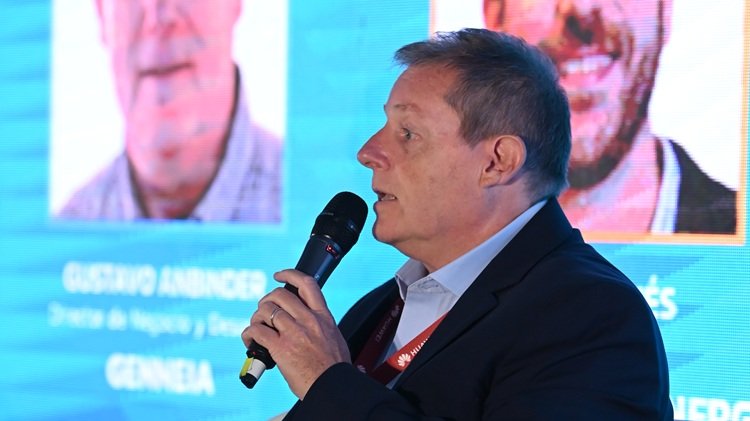
“Banks are competing to lend to us, and at very attractive rates. There is a strong appetite to invest or provide financing in Argentina, especially for companies that deliver on what they commit to,” said Gustavo Anbinder, Genneia’s Business and Development Director, during the Future Energy Summit (FES) Chile.
Genneia’s financial strength is underscored by its position as Argentina’s largest issuer of green bonds, with more than USD 1.28 billion issued to date. Its most recent transaction was a USD 400 million green bond with an eight-year tenor, a fixed interest rate of 7.75%, semi-annual payments and a yield of 8%.
“Access to financing is very strong. It took time for a stable set of rules to consolidate, but today private bilateral contracts through power purchase agreements (PPAs) are fully open, and renewables compete on equal terms with conventional generation technologies,” Anbinder added.
According to the executive, the Argentine renewable market matured following the initial push from the RenovAr programme, which left a legacy of around 7.5 GW of operating renewable capacity and a regulatory framework that now supports privately driven growth.
In this context, solar PV is regaining momentum due to falling costs. However, Anbinder anticipates a return of large-scale wind projects once enabling conditions are in place, particularly the expansion of the power transmission system.
“The new projects we are developing, given grid saturation and current power prices, require a much larger scale. We are no longer talking about small projects, but developments above 150–200 MW. The problem is that there is no available capacity in the grid to connect them,” he explained.
As a result, new developments are increasingly incorporating transmission works—such as substation expansions—directly into project capital expenditure (capex).
To address these bottlenecks, Argentina’s national government has enabled priority transmission projects through a concession regime with private investment. This is a key step for a master plan comprising 16 priority projects, involving more than 5,600 kilometres of 132 kV and 500 kV lines, designed to relieve congestion, prevent outages and strengthen the Argentine Interconnection System (SADI).
The current debate focuses on how these investments will be repaid, as transmission benefits the entire demand base, and costs may need to be socialised. An alternative model under discussion is the development of private transmission lines with priority usage rights.
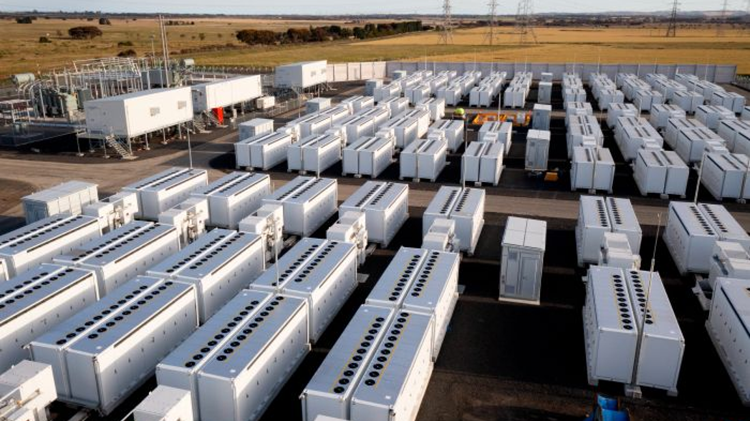
Battery energy storage systems (BESS), while still at an early stage in Argentina, are already part of Genneia’s strategy.
“We haven’t started construction yet because we are waiting for environmental and land-use permits. There has been a learning curve for regulators, but approvals are now at an advanced stage, and construction will begin. The projects will be online in 2026,” Anbinder said.
However, he was clear about the economic challenges facing storage.
“I don’t think it will be a segment that grows massively. For storage to work economically, energy prices need to rise, rather than battery costs falling further,” he noted.
An exception has been the AlmaGBA tender, which awarded more than 700 MW of stand-alone BESS projects and introduced a stable payment scheme that enables bankability.
“If a project relies purely on trading, arbitrage or ancillary services revenues, today it is simply not viable,” he stressed.
Looking ahead, Anbinder expects new sources of structural demand to reshape Argentina’s energy sector. These include stronger links with the oil and gas industry, rapid growth in mining—particularly towards the end of the decade—and the arrival of large-scale data centres.
“Data centres are starting to arrive in Argentina. Hyperscalers with demand ranging from 500 to 1,000 MW are coming, and they need power, which Genneia and other generators will supply. As they are major energy sinks, they can be located close to generation assets, avoiding the need to transport that power across the grid,” he concluded.