












Trina Solar forecasts an upward trend in Chile’s solar photovoltaic and battery energy storage sectors in 2026, projecting to exceed 2 GWh of BESS supplied in the region and to deliver close to 1 GW of solar modules in the Andean country alone.
“Chile is one of the main locomotives of our battery business worldwide. We have closed major projects and successfully captured market needs,” said Andrés Iriarte, Utility Sales Director at Trina Solar, during the Future Energy Summit Chile (FES Chile).
“We estimate that battery supply will grow from 1.2 GWh to more than 2 GWh during 2026. Meanwhile, in solar and trackers, we expect a supplied volume of around 800 to 1,000 MW,” he explained to an audience of more than 400 industry leaders.
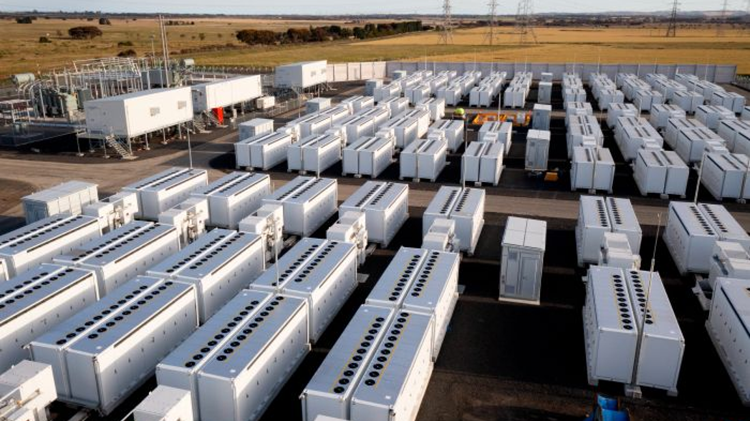
Among the flagship projects in which the company is involved is the Copiapó PV + BESS plant, with a capacity of 233 MW / 1.2 GWh, owned by power producer Atlas Renewable Energy. Located in Chile’s Atacama Desert, the project will include 244 units of Trina’s Elementa 2 system, each with 5 MWh of capacity, becoming the largest standalone BESS project in Latin America supplied by Trina.
Relive the Future Energy Summit (FES) Chile 2025:
https://www.youtube.com/watch?v=dcqxLQGp3SE&t=5813s
It is worth recalling that the company promotes three business lines — photovoltaic modules, trackers and energy storage — all developed under a vertically integrated strategy that allows Trina Solar to control manufacturing from the origin.
This technical capability and adaptability are also reflected in new developments. Weeks ago, during FES Chile, the company introduced its Elementa 3 system, a BESS solution offering 6.25 MWh per container, which improves both the technical and financial efficiency of storage projects.
As a result, Trina Solar, through its business unit Trina Storage, already has 4 GWh secured in signed contracts across Latin America and is aiming to reach 8 GWh by 2027.
How will it achieve this? Proprietary technology, cost efficiency and local presence are the three pillars underpinning the company’s growth. “This allows us to remain extremely competitive and participate in large-scale projects,” Iriarte stated.
“We have solid teams capable of supporting opportunities and adapting our products to the needs of each market,” the executive added.
While the photovoltaic modules are manufactured in China, batteries, trackers and fixed structures are locally adapted by engineering teams in Brazil, Colombia, Peru, Argentina and Chile, in order to respond to the specific characteristics of each country in the region.
Despite technological progress and growing competitiveness, structural barriers to regional sector development remain, mainly related to regulation and, almost as a consequence, financing.
From the specialist’s perspective, the specialised technical teams that Trina has across the region are key to overcoming these limitations and capturing new opportunities, while the company’s vision is focused on the medium term, with more competitive solutions and a consolidated market position.