











The renewable energy sector in South America is entering a new phase of maturity. Larger, more diverse, and increasingly complex projects mean that moving equipment is no longer enough. Logistics is now understood as part of the project’s operational architecture—an approach embraced by Robinson Group through its regional arm, Mercomar.
“Upcoming projects will require much more logistics planning, engineering, and simultaneous execution,” said Nicolás Marty, Regional Sales Executive at Mercomar, in an interview with Energía Estratégica.
This is not a forward-looking aspiration, but a direct response to what developers and EPC contractors are already facing on-site. Looking toward 2026, the company anticipates continued growth in logistics demand, alongside increasing pressure on execution and compliance. Each new megawatt installed will require a robust, flexible, and professionalised logistics chain to match.
Within this context, Mercomar structures its operations to support projects from the earliest design stages. “Optimal logistics is built early,” Marty emphasised. This means being involved during engineering and aligning logistics milestones with procurement, construction schedules, and key suppliers.
The company provides a comprehensive portfolio of services, including international freight forwarding, project cargo, maritime and air chartering, route engineering, permits and escorts, specialised lifting operations, laydown yard planning, and full customs management. Its focus is on oversized, heavy, and time-critical cargo—typical of large-scale solar PV and wind power projects.
Beyond the service list, the differentiating factor lies in combining engineering and execution through milestone-based planning, realistic contingencies, and strict document control. In an environment where delays directly increase costs and disrupt installation sequences, crane utilisation, and contractual deadlines, this approach becomes critical.
Mercomar works with a “site-ready” delivery model, synchronising shipments with the real pace of construction and relying on prior technical validations such as actual weights, packaging specifications, unloading sequences, and alternative logistics nodes.
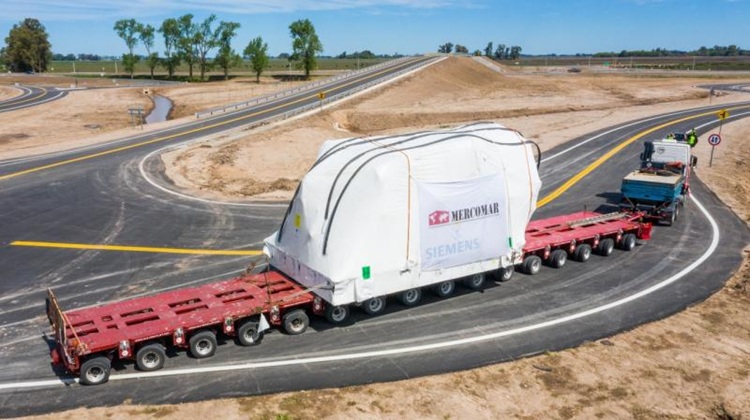
With extensive regional experience handling critical components, Mercomar has managed transports such as power transformers weighing up to 230 tons and shipments highly sensitive to tight schedules. In these operations, success depends not only on transport itself, but on route engineering, permit coordination, and the safe execution of heavy-lift manoeuvres using the right equipment.
This capability is especially relevant in South America, where infrastructure constraints remain a challenge. Road conditions for oversized cargo, border crossing times, port congestion, and the availability of suitable laydown areas often introduce uncertainty.
“Urgent improvements are needed in authorised corridors, logistics access prepared for oversized cargo, and standardised processes at critical nodes,” Marty noted.
Rather than reacting to risks, the company focuses on designing resilient operational routes from day one. Key risks to mitigate include international schedule variability, unpredictable road permits, congestion, limited availability of critical resources such as cranes and escorts, and documentation delays. The solution, according to Mercomar, is realistic planning with buffers defined milestone by milestone—not generic contingencies.
“Logistics cannot be treated as an auxiliary service; it must be fully integrated into project design,” Marty stressed.
Technology, visibility, and performance control
Anticipation today also depends on information and technology. Mercomar supports its operations with digital tools that provide full visibility and traceability across the supply chain.
Key capabilities include milestone-based track & trace systems with periodic reporting, evidence collection, and deviation monitoring. Each project is supported by a single, centralised document repository with version control and traceability for technical, customs, and operational documentation.
Operational KPIs allow teams to monitor on-time, in-full (OTIF) performance, identify root causes of delays, measure stage-by-stage lead times, and assess last-mile execution. Historical data is used to anticipate deviations from estimated times of arrival (ETA) and make early decisions on permits, routes, or logistics windows.
“This reduces friction between supply chain and construction teams and lowers the risk of hidden costs related to waiting times, rework, and rescheduling,” Marty concluded.
In a region where renewable energy investment continues to accelerate, Mercomar’s integrated logistics model positions the company as a strategic partner for developers and EPCs seeking to de-risk and accelerate solar and wind power projects across South America.