












The Latin American and Caribbean Energy Organisation (OLACDE) has released its Energy Outlook for Latin America and the Caribbean 2025, an annual report compiling official energy sector statistics from its 27 member countries and analysing the trends that will shape the region’s energy transition in the coming decades.
Among the report’s key findings, energy storage emerges as a critical pillar to ensure system flexibility, reliability and the large-scale integration of renewable energy.
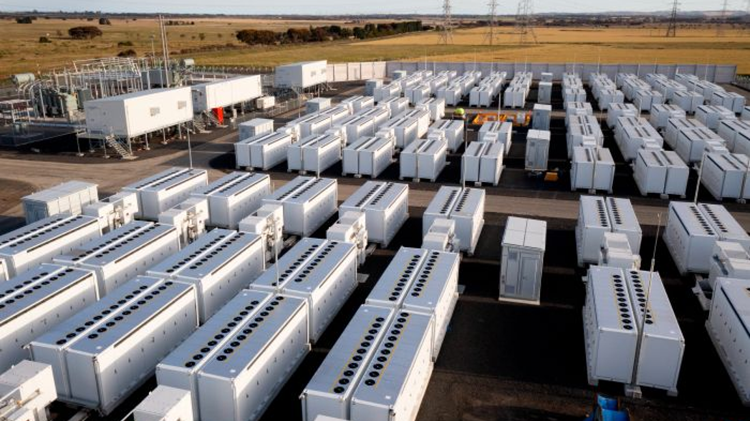
At present, the region has around 1.7 GW of installed battery storage capacity. However, OLACDE projects this figure could rise to 24 GW by 2030 and 46 GW by 2035. Achieving this expansion would require investments of approximately USD 24 billion by 2030 and USD 46 billion by 2035, based on an average cost of USD 250 per kWh, although technology costs continue to decline rapidly.
Chile currently leads energy storage deployment in Latin America and the Caribbean. The country has 1.4 GW already installed and an ambitious project pipeline that could take capacity to 8 GW by 2030, including 900 MW under testing, 3.7 GW under construction and 2 GW in the permitting phase.
Other countries are also beginning to scale up. Argentina recently awarded 713 MW through a competitive tender originally designed for 500 MW, while Honduras awarded 75 MW in a recent procurement process.
From OLACDE’s perspective, energy storage should not be seen as an end in itself, but rather as a tool to build a more resilient and adaptable power system.
“Energy storage systems are not an objective per se, but a mechanism to achieve greater security and flexibility,” said Fitzgerald Cantero Piali, Director of Studies, Projects and Information at OLACDE.
Renewable energy outlook to 2025 and 2050
According to the report, renewable generation capacity in 2025 increased by 7% compared to 2024, with renewables accounting for 68% of all new capacity additions. Solar PV and wind power represented 61% of this new renewable capacity.
Electricity generation from these two technologies grew by 19%, bringing the share of clean electricity generation to 67% across Latin America and the Caribbean, reinforcing the region’s position as one of the most renewable-heavy power systems globally.
At the same time, final electricity consumption rose by 3.7%, while per capita consumption increased by 2.6%, confirming a sustained growth trend. This expansion was supported by a higher contribution from natural gas, whose power generation increased by 12% year-on-year, consolidating its role as a transition and backup fuel in the decarbonisation process.
By contrast, coal-fired power generation declined by 21%, while oil-based generation fell by 31%, confirming a structural shift in the regional energy mix.
Looking ahead to 2050, under an accelerated decarbonisation (net-zero) scenario, the region will need to triple its installed power generation capacity, adding around 1,000 GW, of which 90% would come from renewable sources. This pathway also foresees the deployment of 80 GW of battery storage, with total investment needs estimated at USD 1.5 trillion.
The share of renewables in final energy consumption is expected to increase from 31% today to 48% by 2050. In power generation, renewables would account for 76%, with solar and wind contributing 37%, while natural gas would supply 22% and coal just 1%.
Total primary energy supply will also reflect this transformation: natural gas would rise from 26% to 34%, while non-conventional renewables would grow from 5% to 14%.
In parallel, green hydrogen production is expected to consume 12% of total electricity generation by 2050, while data centres could account for 10% of regional electricity demand, representing around 40% of electricity consumption in the commercial and services sector.
According to Tatiana Castillo, adviser at OLACDE, countries across the region are overhauling their regulatory frameworks, introducing new legislation for renewables, energy storage, green hydrogen, geothermal energy and critical minerals.
“For the first time, we are seeing a real maturation of the regulatory framework for the energy transition,” Castillo said.
Despite this progress, the transition still faces significant challenges, including regulatory gaps, financing constraints, a shortage of skilled technical personnel and environmental risks. Even so, there is broad technical consensus on one point: without energy storage, large-scale renewable expansion will not be feasible.
“The energy transition must be a state policy, not just an energy sector policy,” Cantero Piali concluded.