








José Antonio Kast, leader of Chile’s Republican Party, has been elected president. With 58.3% of the vote, the right-wing politician defeated ruling-coalition candidate Jeannette Jara, who secured 41.7% and conceded after 95% of ballots were counted.
The election marks a clear political shift that will take effect on March 11, 2026, when Kast is set to assume office at La Moneda Palace, replacing current president Gabriel Boric.
What does this mean for Chile’s energy sector? According to advisors close to the president-elect, the incoming administration is preparing a reform agenda centred on consumer freedom, stronger market signals, and openness to clean energy technologies without subsidies.
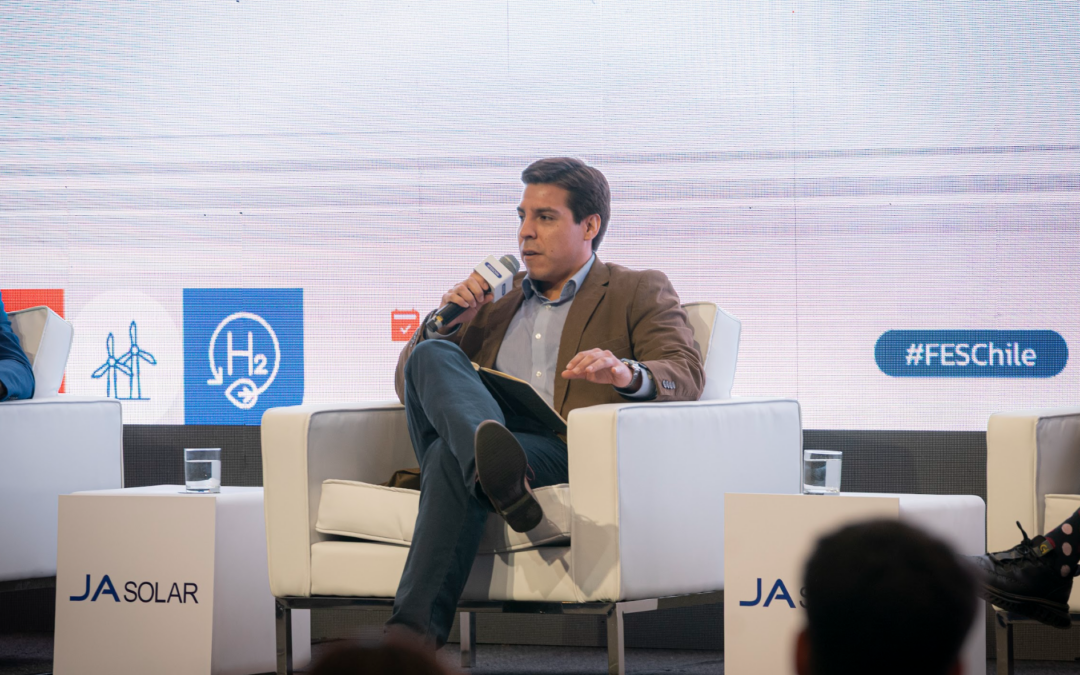
Speaking at a previous debate organised by ACERA, Chile’s renewable energy and storage association, José Venegas, an energy policy figure aligned with Kast, stressed that the focus will not be on sweeping legislative changes.
“The main task ahead is not a major legislative effort,” Venegas said. “It’s not about selling panaceas or magically lowering prices, but about restoring consumer freedom, allowing customers to make decisions, and ensuring fair competition among companies.”
A key objective of the new administration is to ensure that regulated customers and small consumers can “get on board with electrification,” addressing what Kast’s team describes as an unresolved gap left by the outgoing government. To achieve this, the incoming coalition is considering a structural reform of the electricity distribution system, aimed at improving service quality, enabling distributed generation and distributed energy storage, and reducing power outages linked to extreme weather events.
From the perspective of the new government, Chile’s future is firmly renewable. With more than 30,000 MW of projects either under environmental assessment or under construction—99% of them renewable—the country is already moving toward a cleaner power mix. Kast’s advisors project that Chile could reach 9,000 MW of battery energy storage systems (BESS) by 2027, increasing to 14,000 MW by 2030.
Venegas also anticipates that coal-fired generation could be almost entirely phased out in the first five years after 2030, supported by the large-scale deployment of renewables and batteries.
While welcoming the energy transition, the new team also highlights the technical challenges it creates for system stability. They point to the need for additional tools such as ancillary services, synchronous generation, system inertia, and short-circuit current to maintain reliability in a high-renewables grid—without necessarily resorting to new legal interventions.
According to Venegas, the National Electric Coordinator (Coordinador Eléctrico Nacional) will need to accelerate progress on defining ancillary services and appropriate tariff signals to ensure the availability of synchronous capacity.
During the transition period, the proposal envisions synchronous support continuing to be provided by thermal power plants or by battery-based virtual synchronous solutions, not for price arbitrage but to reinforce grid stability and robustness. This approach, the team argues, would allow Chile to minimise fossil generation while safeguarding operational security.
“The way to solve pricing and tariff problems is by addressing ancillary services, transmission, demand-side flexibility, curtailment reduction, and project uncertainty,” Venegas said.
In that context, Kast’s advisors have been critical of bureaucratic hurdles, lengthy permitting processes, and security conditions in certain regions, all of which they say significantly increase project costs. Those costs, they argue, are ultimately passed on to consumers through higher electricity tariffs rather than translating into more competitive prices.
Distribuited generation: ending the transitional regime and moving toward market-based rules
One of the most specific areas of reform under the incoming government will be the framework for PMGD (Pequeños Medios de Generación Distribuida), or small-scale distributed generation plants, which have come under scrutiny for widespread use of a transitional regulatory regime.
“We need to put an end to the abuse of PMGD projects remaining under construction many months after the transitional regime expired,” Venegas said, calling for a comprehensive review of the system and the elimination of exceptional arrangements. The aim is for PMGD to operate under stable, coordinated rules that reduce safety risks associated with self-dispatch.
Venegas also acknowledged proposals emerging from large power consumers and other stakeholders to create a contract market for PMGD, suggesting this option could be explored.
“We place high value on distributed generation located close to consumption, because it avoids the need to build new transmission lines,” he said. “But given the pros and cons, a proper balance is needed—so PMGD can benefit from the value they provide to the system, without abuses, with clear rules, and while actively contributing to system security.”
Overall, the energy roadmap of Chile’s next government aims to usher in a new phase of renewable energy development, prioritising efficiency, operational stability, and a stronger role for consumers.
The liberal, market-oriented discourse of the incoming administration promises solutions based on technical order and competition. However, it remains to be seen whether, starting March 11, 2026, this strategy will be sufficient to maintain grid stability while meeting expectations for fairer tariffs, improved service quality, and long-term energy security.