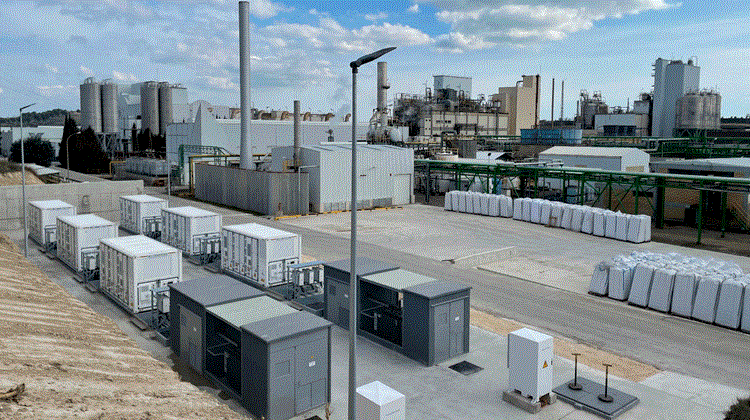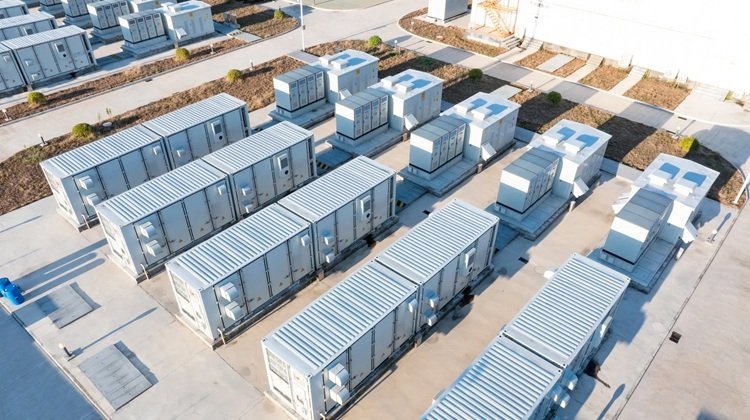













JA Solar is implementing a strategic shift in Latin America as it moves decisively into the battery energy storage systems (BESS) market, with 30 GW of storage manufacturing capacity already operational. Its goal is clear: to provide fully integrated solar PV generation plus battery storage solutions under one brand, reducing both technical and financial friction for project developers.
The announcement was made by José Tomás Ewing Soffia, Senior Sales Manager at the company, during the Future Energy Summit (FES) – Southern Cone. He emphasised that JA Solar intends to position itself not only as a manufacturer, but as a full-scope energy integrator.
With more than 300 GW of solar modules deployed worldwide, JA Solar believes the region has entered a new phase. Developers and utilities are no longer focused solely on module procurement; they now demand bankability, traceability, and long-term support across the entire project lifecycle.
“We aim to deliver service and customer comfort, from system design through commissioning,” said Ewing Soffia.
To support this approach, the company is partnering with leading global manufacturers to offer BESS solutions with local technical support. According to the executive, the 30 GW storage capacity is being deployed to serve fast-growing markets such as Chile, Brazil, Colombia, and Argentina, where BESS is increasingly integrated into national energy planning.
Despite strong market projections, the expansion of energy storage in Latin America is still constrained by two structural challenges: the lack of clear regulatory frameworks and the absence of financing mechanisms adapted to BESS projects.
Ewing Soffia noted that several countries — including Chile — still lack well-defined rules for certifying, operating, or integrating battery systems. As a result, manufacturers are forced to design equipment and solutions based on intuition or profitability, contributing to technology fragmentation.
“When regulations are ambiguous, every company optimises based on profitability, and that can lead to long-term technological disruption,” he warned.
On the financing side, JA Solar observes that while developers have mature project pipelines, the bottleneck emerges during the financial close. Banks require clear guarantees — a challenge when multiple brands are involved or when systems do not meet specific national standards.
To address those gaps, JA Solar is promoting a turnkey model that combines equipment supply, engineering, traceability, certifications, and full technical support. This integrated approach is designed to streamline financial approval for storage projects that might otherwise be delayed or cancelled.
Another trend highlighted by the company is the increasing sophistication of Latin American energy clients. Beyond competitive pricing, developers now demand brands capable of supporting the entire project lifecycle. This, Ewing Soffia stressed, is pushing manufacturers to evolve into true integrators.
“Many customers are now giving integration a real opportunity, unifying solar and storage under a single brand with technical and financial backing from day one — and for the long term,” he said.
Within this strategy, JA Solar aims to position itself not as a conventional supplier but as a long-term strategic partner, supporting developers from early quotations and permitting processes through installation, commissioning, insurance, standards compliance, and operational stages.
The company’s long-term vision draws a parallel to the rapid expansion of solar energy over the past decade. JA Solar believes that BESS will experience similar acceleration — but only if regulatory, technical, and financial barriers are removed. And for that, it argues, supplying batteries is not enough; they must be intelligently integrated within a unified value proposition.