











“2026 is a hinge year for Panama,” said Carlos Boya, research scientist at the Instituto Técnico Superior Especializado (ITSE), referring to the country’s clear signals of renewable expansion and regional grid integration.
Panama is preparing to award 200–250 MW of new solar PV capacity through long-term contracts in an exclusive tender included in the official 2025–2028 auction schedule.
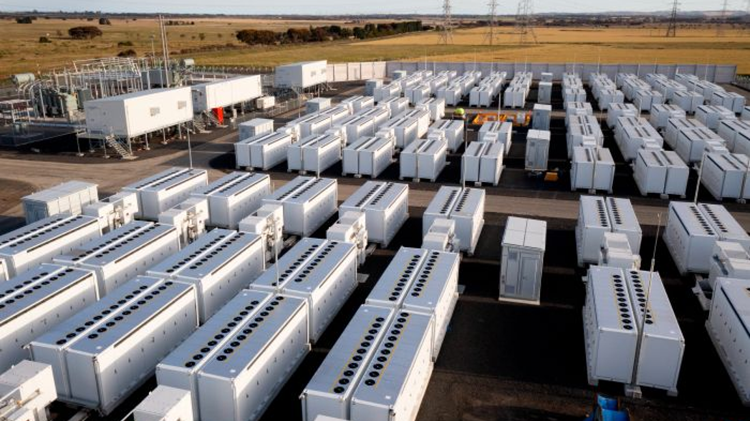
The country is currently conducting a renewable energy procurement process and has recently expanded its long-term planning by formally incorporating energy storage as a priority technology. This update extends the tender schedule to 2029 and adds dedicated technology blocks—such as a planned 50 MW storage tender in 2028.
This initiative complements ongoing solar and wind projects that received provisional approvals in 2025. At the same time, Panama’s distributed solar self-consumption segment continues to grow at a double-digit pace. Between 2023 and 2025, several new systems were installed, positioning the country to reach 80–100 MW of additional distributed capacity by end-2026, mainly in urban areas, industrial parks and commercial sectors.
The country also aims to advance the Panama–Colombia Interconnection, a 500-kilometer high-voltage direct current (HVDC) line operating at 500 kV with 400 MW of transfer capacity. It would link the Panamá II substation to Colombia’s national grid, enabling the export of surplus solar or wind generation, strengthening energy security during droughts and improving broader integration between Central America and the Andean Region.
Boya highlighted that the project is “a strategic piece for managing renewable variability at a regional scale.”
Despite the progress in planning, Panama’s electricity system still operates under a 1990s-era regulatory framework, designed for a centralized power matrix with low digitalization and limited ability to handle emerging technical dynamics such as bidirectional flows, storage, and active demand management.
According to Boya, “Panama must modernize its electricity market law to incorporate hourly tariffs, aggregators, storage and distributed generation regulation,” alongside updating grid codes and stability criteria for a system with growing levels of solar PV that do not provide inertia or frequency support.
Panama has already surpassed 170 MW of installed self-consumption capacity, with over 6,000 active users, introducing new technical challenges. While this growth supports the energy transition, it also increases vulnerability—especially under high solar variability or extreme weather conditions.
Beyond the volume of added capacity, the key issue is system stability. Recent modeling shows that if distributed solar PV and electric mobility expand without coordination—no smart charging, no hourly tariffs, no storage—the system could face pronounced duck curve effects, with steep midday drops and sharp ramp-ups at sunset.
These conditions could generate demand spikes of up to 30% above the base load, increasing dependence on fossil-fired generation during peak hours.
In this scenario, reinforcing stability studies, conducting detailed simulations of the national interconnected system, and updating operational tools become essential. Without these adjustments, the benefits of the energy transition could be undermined by higher costs, grid failures or operational inefficiencies.