











Christopher Atassi Morales, CEO of Solar Steel—the solar-tracker division of the Spanish industrial group Gonvarri Industries—confirmed during the Future Energy Summit (FES) Peru that the company has reached more than 30% market share in the local industry. “We are leaders here; it is now our third most important market,” he said.
Solar Steel’s presence in Peru began in 2012, when the company participated in the country’s first utility-scale solar photovoltaic projects. “Tacna and Panamericana were among the first plants equipped with our trackers. That is where our relationship with Peru’s solar market began,” he recalled.
The company initially supplied 40 MW, a volume that today may seem modest but represented a milestone at the time. “In 2015, 40 megawatts meant something very different. To put it into perspective, two years earlier the largest solar plant in Europe had just 26 MW,” Atassi Morales explained.
Since then, Solar Steel has maintained a constant presence in the country, supported by long-term client relationships and accumulated local experience. “Sometimes you develop a natural connection with a country, and that has happened to us with Peru,” he said.
Looking ahead, the company aims to surpass 1,000 MW of cumulative supply in Peru by 2025. A large portion of that growth is tied to the CSF Illa solar complex, considered the largest solar PV project in Peru and one of the largest in Latin America. Developed by Inver Renewable Management, the 472 MWdc (396 MWac) project includes more than 6,800 of Solar Steel’s single-axis 1P trackers, which will support more than 740,000 high-power PV modules.
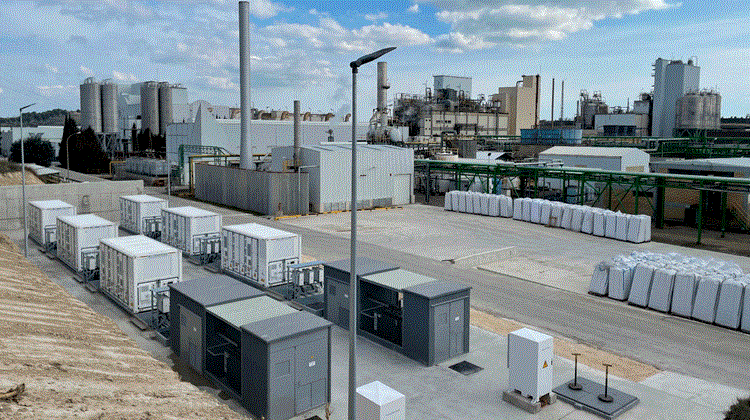
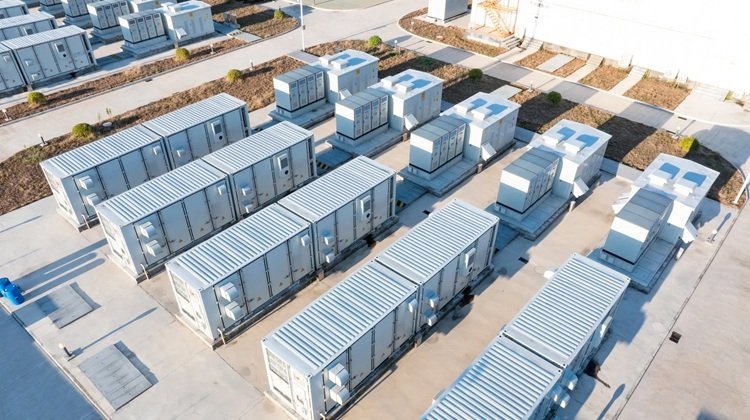
Atassi Morales emphasized that energy storage is emerging as a disruptive component in this new phase of Peru’s energy sector. Its increasing technological maturity aligns with the expansion of renewable energy in the country, improving planning for system stability and grid integration. He added that Peru has an opportunity to anticipate challenges already experienced in other markets, provided it ensures a stable regulatory framework and long-term planning. “Capital is cautious; any perception of insecurity can slow down renewable energy deployment,” he noted.
The CEO also described logistics as one of the main operational challenges in Peru. While the country offers large-scale solar opportunities, this scale increases complexity in transportation, port operations and overall project coordination. With more than a decade of experience in Peru, Solar Steel has developed the capacity to address these challenges effectively. “Experience is our best guarantee—it helps us anticipate problems, even though you’re never entirely free from them,” he said.
Regarding competition, Atassi Morales affirmed that the company is committed to maintaining its leadership position. “We operate in a competitive environment, and our mission is to compete first against ourselves,” he stated. “We enjoy competition; it motivates us and drives continuous improvement. We will keep our strategic path and work to maintain our market share by doing things the way we believe they should be done.”
Compared with other markets, Peru offers specific advantages for renewable energy investment, including a dollarized economy, competitive energy prices and a relatively balanced supply-demand scenario. These characteristics, he said, make the country an attractive destination for infrastructure development in renewable energy.
Globally, Spain remains Solar Steel’s main market, followed by Latin America, where Chile and Peru are the company’s strongest hubs. “We feel very comfortable in Peru; it is like our second home, and this new phase encourages us to be even more ambitious,” he said.
At the close of the interview, Atassi Morales expressed optimism for the next edition of FES Peru. “I hope we can say that we remain just as active, with an even larger market in the country. And I hope renewable energy continues to be a national priority for Peru,” he concluded, reaffirming Solar Steel’s commitment to strengthening its leadership in solar PV, energy storage and large-scale renewable energy deployment.