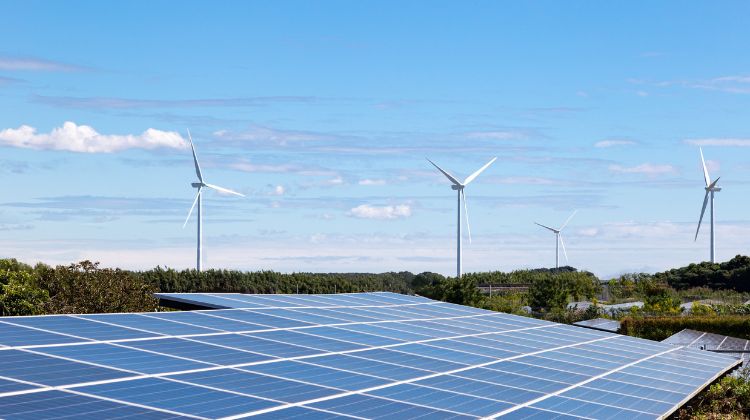












After several years of rapid growth, wholesale electricity market prices have reached historically low levels, forcing operators to rethink their strategies.
So far in 2025, the average annual price is €64.96/MWh , with a drop of over 50% between February and March and a 24% increase in October to €75.78/MWh . Throughout the year, 775 hours were recorded with prices equal to or below €0/MWh , reflecting the impact of increasing solar power generation, slow-growing demand, and structural limitations of the grid.
José Donoso , Director General of the Spanish Photovoltaic Union (UNEF) , acknowledges that the prices captured by photovoltaic plants and the energy sold into the grid continue to be “the main concerns of the sector’s business owners.”
In an interview with Strategic Energy Europe , he explains that there are currently more than 70 GW of projects seeking grid connection , which triples the country’s average demand, so he considers it essential to accelerate the completion of these projects to stabilize the market.
“We can’t waste any more time, because these opportunities could vanish if the tenders aren’t finalized as soon as possible,” he asserts. The sector’s objective is to consolidate industrial demand and collective self-consumption as drivers of electrification and reindustrialization.
It also points out that the recent approval of the new Royal Decree 355/2025, which enables the dynamic management and hybridization of photovoltaic plants, “is a very important step forward” to solve the problems of low captured prices and improve the business case of the plants.
This context is also leading to an internal transformation of companies. “If a few years ago the key profile was the person responsible for promoting new sites, today it is the person who knows how to manage electricity sales and participate in all related markets,” Donoso emphasizes .
This brand is evolving towards a model where managing diversified revenue streams—from network services to hybridization with storage—is essential to maintaining profitability.
Social acceptance and order in deployment: pending challenges
The UNEF executive identifies a second critical front: social acceptance. He explains that opposition to photovoltaic development stems from diverse economic interests competing for land use, as well as from movements and parties seeking political visibility in rural areas.
In his opinion, social management will be a determining factor in the 2026 municipal and regional elections, where the local opposition could slow down the processing of new facilities.
In this context, he emphasizes that companies must act “in an excellent manner and in touch with the reality of each area,” working to establish agreements with municipalities and generating value propositions.
At the same time, the sector defends the current plan against criticism that arose after the blackout in 2025. “The reports from the Government, Red Eléctrica and the European regulators rule out any implication of photovoltaics,” says Donoso , adding that the solar deployment has been carried out in accordance with the Integrated National Energy and Climate Plan (PNIEC).
Towards 2026: dynamic management, storage, and new revenue streams
The immediate horizon for solar energy involves three major vectors: dynamic management, storage, and the acceleration of electricity demand.
The recent authorization of the first plants with dynamic voltage management marks a milestone.
“Participating in voltage markets is a key opportunity, not only economically but also in terms of system security,” explains Donoso . This market, which represents a cost of €4 billion for consumers in 2025 , will allow photovoltaic plants to obtain additional income from January onwards by contributing to grid stability.
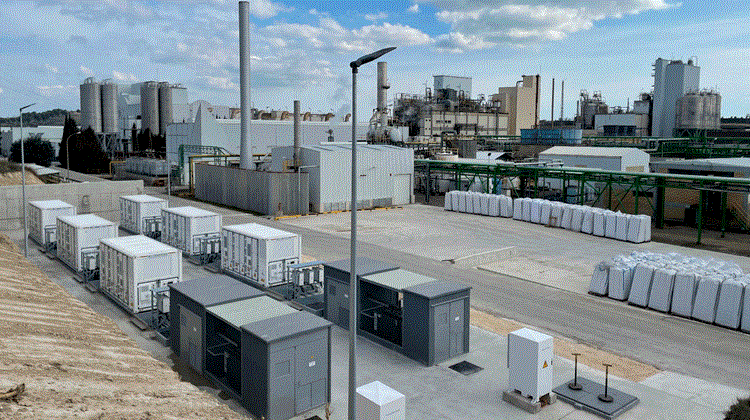
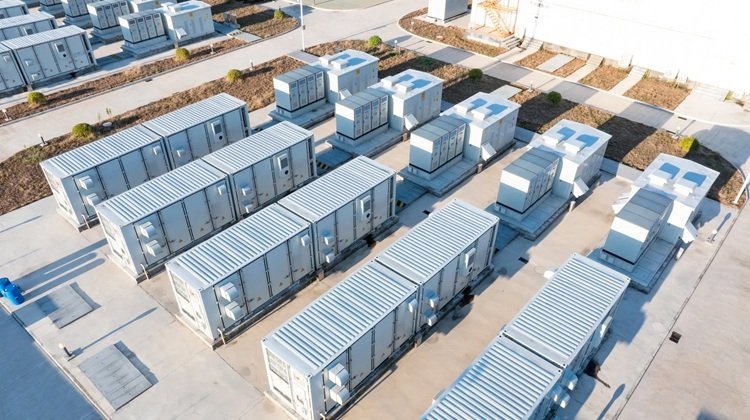
Meanwhile, energy storage is emerging as the second pillar of competitiveness. By the end of the year, the first operational storage facilities will be in place, which in the sector translates into improved financial profitability for power plants and greater participation in the electricity market.
In fact, according to Red Eléctrica’s 2025 Electricity System Report , Spain will add nearly 2 GW of storage capacity before 2026, driven by hybrid solar-battery projects.
All of this opens the door to a 2026 of consolidation and adjustment. “The year 2025 has been a period of necessary uncertainty to clear up unknowns. Some have already been resolved, such as hybridization, but we need to make progress on everything that hasn’t been done this year,” he points out.
¿Cuáles son esas tareas pendientes? Promover la electrificación y el almacenamiento , junto con nuevas subastas de energía que garanticen la estabilidad para los inversores.
According to the UNEF representative, tenders remain “essential” for those who cannot secure bilateral contracts and need stable financing.
The price outlook underscores the urgent need to diversify revenue streams. In 2024, the average market price was €76.30/MWh , 23.7% lower than the previous year , while the first half of 2025 saw an average of €62/MWh , 32% lower than the European average . The profitability of power plants will increasingly depend on their ability to participate in ancillary markets and incorporate energy storage.