











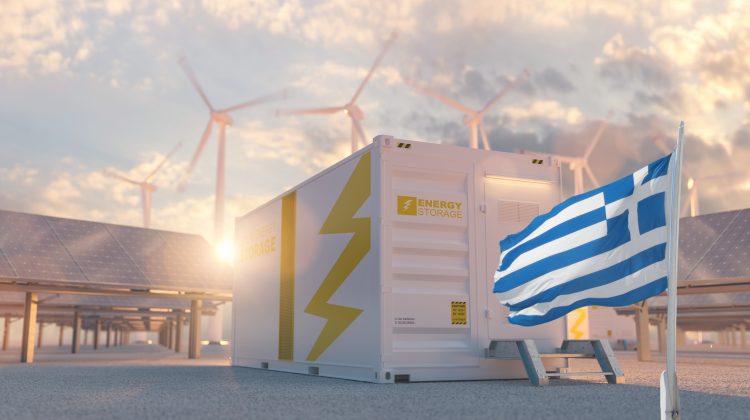
In March 2025, Greece registered 200 GWh of renewable curtailment, almost 25% of the 2024 annual total. This situation is no small feat: the country could close the year with a curtailment volume exceeding 1.7 TWh, representing almost 7% of all its electricity generated from renewable sources.
“The problem with curtailments is very crucial and serious throughout Southeast Europe, and of course, in Greece,” said Mr. Christos P. Gkikas, Senior Energy Consulting Professional, in an exclusive interview with Strategic Energy Europe.

Mr. Christos P. Gkikas, Senior Energy Consulting Professional
This phenomenon, which affects the injection of energy into the grid, is severely impacting the profitability of renewable energy projects. According to the consultant, even curtailments of 1% or 2% can have a severe economic impact. “It is more than obvious that a project with a 2%-5% reduction in turnover can experience a significant drop in its Internal Rate of Return (IRR).
“Although this represents a 2% or 3% curtailment of energy produced and injected, from a financial perspective, it could be said to represent a serious reduction in revenue,” Mr. Gkikas emphasizes.
Energy storage is the only way to contain the impact
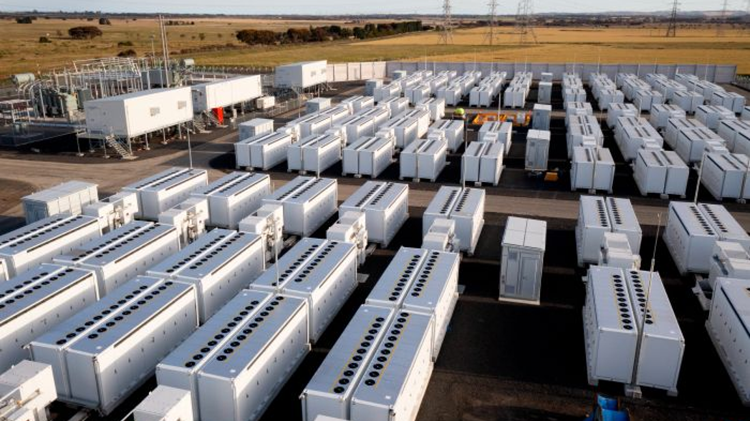
To mitigate these cuts, energy storage is positioned as the most effective solution. “We need a BESS penetration rate equal to or higher than the RES penetration rate. Without a proportional penetration rate of BESS, we will have a very serious curtailment problem in the near future. And we need not only in front of the meter (FtM) BESS but also behind the meter,” Mr. Gkikas emphasizes.
The specialist points out that short-term measures to mitigate curtailment include optimizing grid operations and improving demand response. Long-term measures involve increasing energy storage capacity and modernizing grid infrastructure to better manage the integration of renewable energy.
In this regard, the Greek government has launched a series of measures to reverse this situation. These include three state-aided BESS system auctions that have already awarded 900 MW, in addition to a key call for 4.7 GW of unsubsidized merchant projects seeking priority grid connection.
He added: “More and more investors understand the importance of BESS and are investing more in this technology.”
Merchant BESS: A Strategic Investment by the State
With the new call for 4.7 GW of merchant BESS with priority for grid access, the Greek government seeks to boost the sector without resorting to subsidies. “This is a significant step to accelerate project deployment. It provides a clear regulatory framework, which will help attract investors and expedite the development of facilities,” he emphasizes.
The Senior Energy Consulting Professionalrepresentative assures that there will be a high level of competition, given that the total capacity of Certificates of Energy Storage for FtM (Front-of-the-Meter or standalone) BESS has exceeded 50 GW (50.5 GW based on the officially published data from the Regulatory Authority for Waste, Energy and Water in Greece).
Moreover, applications for the issuance of GCO (Grid Connection Offer) have been submitted for about 23 GW of the aforementioned capacity to the competent operator. However, the requirements are demanding: a financial guarantee of €200,000/MW for IPTO projects and €50,000/MW for HEDNO projects, and loan approval or pre-approval if the interested investors do not have the required equity capital for the implementation of the projects.
Only technically and financially sound players are expected to participate. “We expect mergers and acquisitions in the coming months, including with international players in the Energy Sector”, he mentioned.
“This measure, along with the construction of a factory in northern Greece that will mass-produce organic solid flow batteries (SFF), which offer several advantages over lithium-ion batteries, are significant and decisive steps for Greece to address the reduction in energy input due to intermittent renewable energy generation (RES), boost penetration, and attract even more green investments,” he adds.
A new business model under construction
The profitability of projects without state aid remains a challenge. “Merchant BESS can be profitable, but their IRR depends on many factors, such as participation in electricity markets (DAM, IDM, Balancing Market – FCR, mFRR, aFRR, Capacity Market), CAPEX, the commercial regulatory framework, and the financing scheme,” the expert explains.
It points out that while financial assistance can improve profitability, well-structured commercial projects with adequate market participation can remain viable over the long term, with an IRR close to 10%, especially with the growing demand for grid stability and renewable energy integration (the corresponding IRR for RES with integrated BtM BESS is even higher).
One of the current problems is the lack of definition of the revenue framework in the balancing market, which hinders project bankability. Schemes such as tolling agreements, customized PPAs, and profit sharing with aggregators, inspired by more mature markets such as the United Kingdom or California, are being analyzed.
BESS Auctions: Growing Participation, Intense Competition
Storage development has been stimulated by three consecutive auctions for state-aided projects totaling 900 MW:
- The first two were for 2-hour batteries.
- The third, more recent auction focused on 4-hour batteries, awarding 188.9 MW across nine projects, with an oversubscription level of 3 times the bid, lower than previous editions but still competitive.
“In particular, oversubscription was slightly higher than 3.0 times, while the corresponding oversubscription for the first and second FtM BESS auctions was higher than 8.0 and 5.6 times, respectively,” he analyzes.
The weighted average price of winning bids in the third FtM (4-hour) BESS auction was €52,589/MW/year, compared to €49,748/MW/year and €47,680/MW/year in the first and second auctions, in which 12 and 11 projects were selected, respectively.
“In this third auction, it was a surprise to see that some small companies managed to obtain a bid, while other large players did not,” comments Mr. Gkikas.
Projections and Warnings for 2025 and beyond
The forecasts for this year are not encouraging. “We don’t expect any BESS projects to be operational this year. Perhaps by the end of 2025, but most likely the first ones will come online in 2026,” acknowledges Gkikas.
In this context, curtailments will continue to increase. “They may double or triple compared to 2024,” he warns. About 8 GW of storage will be needed to keep curtailment losses below 2%.
“Severe pressure is expected on the financial and business models of many renewable projects, given that the first battery projects will begin operating next year. Meanwhile, more and more market players are insisting on establishing a producer-specific compensation mechanism that will aim to implement output cuts in a fair and transparent manner,” he notes.
“I am optimistic and believe it is possible to achieve this, provided that investments and supportive policies continue,” Mr. Gkikas concludes. “Curtailments must be integrated into financial models from the outset. It’s not just a loss of profit; it’s a reduction in turnover, and that is crucial.”